Started 24 July 2013
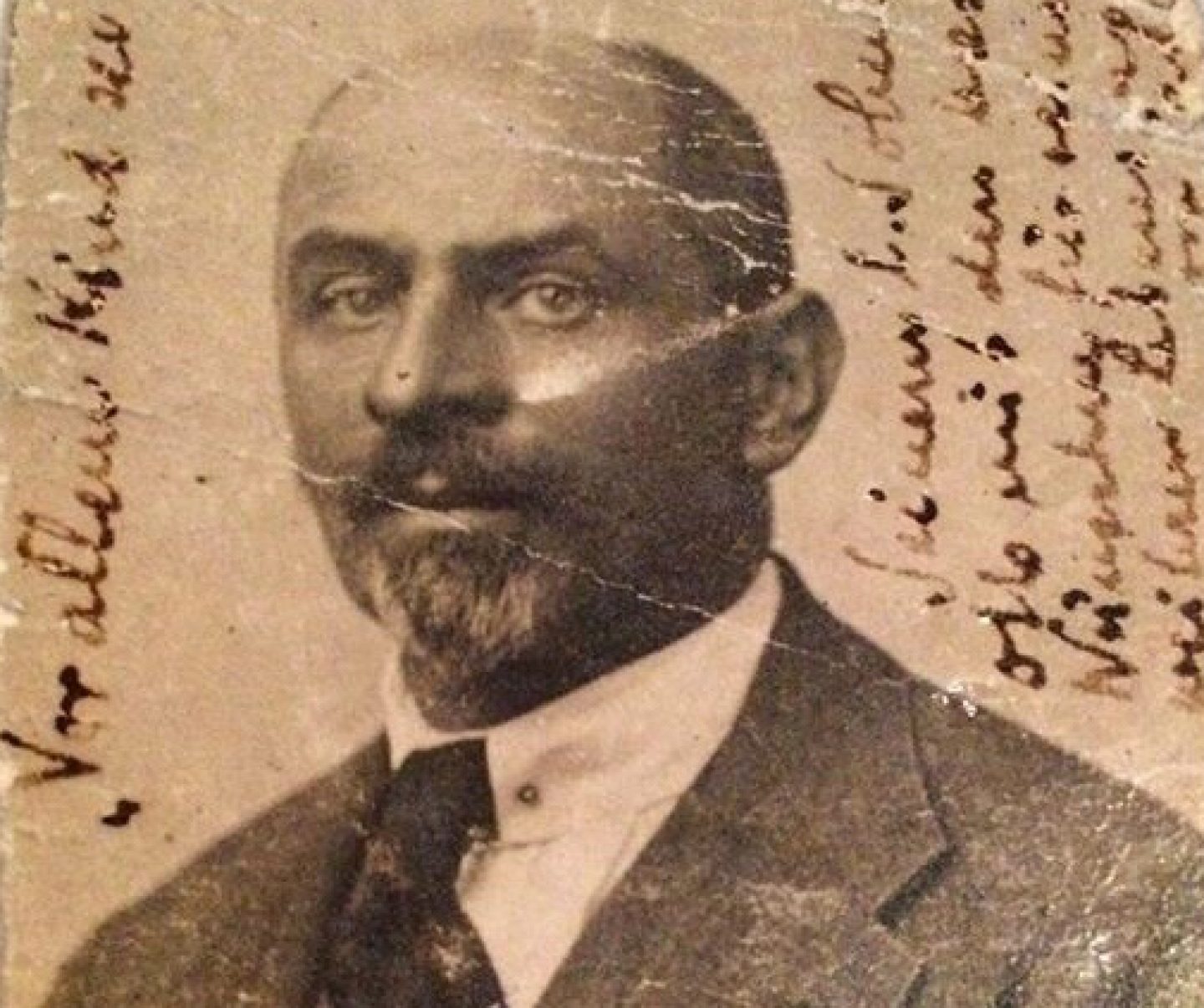
So let’s bite the bullet and start on Tom Greenwood’s school days, in fact Tommy Grunwald’s, pronounced the English way, no umlaut; that was my name all the way through Hollins Grove.
After my preliminary experiences of school at St Cuthbert’s (Tommy’s not feeling very well today!) and Miss Regan’s, I suppose I started at Hollins Grove in August 1941, when I was approaching 5. In those days the school holidays began on the same date as the town holidays, the wakes week, which in Darwen started on the second Saturday in July. At the time, I never heard anyone talking about the wakes week, it was just the town holidays. But this means that the autumn term must have started in the middle of August. The school summer holidays were certainly not more, and probably a bit less, than six weeks. Hollins Grove was attached to Hollins Grove Congregational Church, so a church school, and the grounds included the school and the Congregational chapel. It was in Blackburn Road, Darwen, about fifteen minutes’ walk from our house. Here’s a map; our house is at the bottom on the left in Earnsdale Avenue (actually not where the flag is but maybe 200 yards further up and round a left hand turn, so to go to school, I would normally, if not distracted, walk down Earnsdale Avenue, continue along Earnsdale Road to the bottom (all downhill), in fact turn left towards Falcon Avenue along a narrow street, turn right into Falcon Avenue, go the the end, i.e. Blackburn Road. The unnamed road north of Falcon Avenue is Oldfield Road, and soon after that there was the entrance gate, painted green, to the school, for girls and infants. If you went on to Hawkshaw Avenue and turned left you came to the school gate, also green, for boys, i.e. first year juniors (in modern English) and upwards. So, after the first, or second day, I always walked to and from school, except when, e.g., in the afternoon, I got the bus to the Darwen town centre and then the Sunnyhurst bus home, but this was pretty exceptional. Falcon Avenue ran between Blackburn Road and one of the gates to Sunnyhurst Wood, so one could also go to and from school through the wood, e.g. by turning into the wood opposite Harwood Street (if going down). Then one would normally not go as far as Falcon avenue but cut across the “little meadow” to arrive in Hawkshaw Ave.
Incidentally a kid called William Reeves lived in Oldfield Road; he was in my year all the way through Hollins Grove, and again in Cambridge, where he went to Kings College and read history. I only met him once during the three years we were at Cambridge; there just didn’t seem to be a good enough reason to either of us to continue the acquaintance. (He went to Darwen Grammar School while I was at Lancaster). His parents were both teachers, his father a headmaster, his mother a primary teacher. I remember his mother was an Ulster Presbyterian with a strong Ulster accent. William could paint well and was neat, as well as bright, and was consistently top of our class in the exams. (A girl called Barbara Horrocks who lived in Hawkshaw Avenue was usually second). I remember once, he painted a design for a border to go round the top of the walls of a room – a very normal feature at the time. It was a zigzag pattern in green and violet and I just thought it was brilliant.
Once, his mother taught our class as a supply teacher whilst our teacher, I don’t remember who, was absent, and William behaved abominably with her, really cheekily and disruptive. What an eye opener!
William also once mentioned that his father’s brother had just died of cancer and that he went with his parents to look at the body. He said he was so surprised to see his uncle lying there, he looked so normal. He said he kept wanting to say, “Come on, get up and we’ll all get back to normal”. It was so difficult to accept that he was dead.
I went round to William’s to play after school a few times. Friendships seemed to come and go without any hard feelings. He had all the William books that had been published up till then, the “Just William” books by Richmal Crompton, that is. I just had one or two. After that he regularly lent me the ones I hadn’t read which I greatly appreciated. Once I dropped one into the loo and it got very wet. I dried it as best I could and it was pretty ruined but still readable. When I returned it I said that I’d dropped it into the bath, hoping that that was acceptable. Nothing was said about it afterwards so I was much relieved. I still came across him occasionally later on, before Cambridge, by which time he was Bill, but at Hollins Grove he was always William. William was an only child and always impeccably turned out and well behaved, except for that supply teaching episode.
Now, back to Hollins Grove The school was generally considered very good and all the kids in our neighbourhood went there. No one went to St Cuthbert’s which was even slightly nearer, in Hollins Grove Street.
So I started in the reception class, always exclusively called the Baby Class, where the teacher was Miss Yates. I don’t think I cried when my mother left me there, after all, I was a veteran of Miss Regan’s, but I remember it was chaotic, you could say the normal bedlam of screaming kids being left at school by their mothers for the first time.
A bit more about the school; it was founded and built in the 1870s (you can find an awful lot on Wikipedia) and I would say that when I went there, not a lot had changed. The headmaster was a Mr. Aspinall and it was a one stream entry school. The infant department consisted of the Baby Class and Class 1, and the junior school of Standards 1, 2, 3, 4 and 4A. So for some reason that was never explained the fifth year junior class was not Standard 5 but Standard 4A.
The Baby Class: I must have spent six full school years at Hollins Grove (let’s call it HG from now on, but not to be confused with the Home Guard of course) from Aug 1941 until July 1947, and assuming that I spent a full school year in each of the five junior school years, I can only assume that I only spent one full year in the Baby Class plus Class 1 combined. I’ve never thought of that before but it must be right. So it can only mean that, as I had already done over a year at St Cuthbert’s plus Miss Regan’s, which could be seen as equivalent to Kindergarten or Nursery School, I must have been put up to Class 1 fairly quickly. No doubt I could already read and write, etc, quite well. And that would explain why I was always the youngest in the class, with a September birthday, instead of one of the oldest. I’ve got my HG report book somewhere, and that should show when I started in Standard 1.
I don’t remember a lot about the Baby Class. The teacher, Miss Yates, retired soon after I moved up from her class, so assuming she retired at 60 which was normal then, she would have been in her late 50s at the time. I remember she sometimes wore a green cardigan. She was certainly very kind and grandmotherly, not at all severe, and very well liked. I remember a colourful, bright, well lit classroom, a slide against one wall, the rows of small desks and chairs, the screaming of the new kids on their first day. I remember especially the screaming of Derek Walsh, a red haired kid, at the time we would surely have said ginger-haired, who lived in Harwood Street and who was in the same class as me all the way through HG. I must have been pretty happy with Miss Yates, but don’t remember anything else specific about the class. For most of the time I was at HG I stayed at school for lunch, but there were times when I went home. The school lunches, in fact we always said school dinners, cost 5d per day, making 2s 1d per week (10½p), and the money was collected on Monday mornings. It was not good to arrive without your dinner money.
School started at 09h00. If you were late, you were sent to wait outside the headmaster’s office. That only happened to me once that I remember in all the six years that I went to HG, and that time we were just given a mild telling off. So school was from something like 09h00 till 12h15(?) and 01h45 till 4 o’clock for the Baby Class and Class 1, and till 4.15 for the rest of the school. There were breaks, playtime, mid-morning and mid-afternoon, in the school yard if it wasn’t raining. The infant classes went into the girls’ playground, very different from the boys’. (Over the entrance to that side of the school, “Girls and infants” was carved in stone above the door). The “big” girls played endless games of hop-scotch, and with skipping ropes, counting, singing, chanting all sorts of rhymes. And lots of handstands when you would see the girls’ knickers. I can remember us little kids playing, “What time is it Mr Wolf?” from time to time. I liked that.
The loos were basic but clean and OK; they were always referred to as the “petty”. There were no indoor loos for the children at HG; going to the loo always meant going out across one on the school yards. I remember, probably when I was in Class 1, being in the urinal area, just a wall, no stalls, competing with the other little boys at who could pee the highest up the wall.
And perhaps this is the place to mention that, especially in the lower end of the school, kids were, as everywhere, being sick in class from time to time. Or even dashing out but not making it to the loo. And then the school janitor would arrive very calmly and promptly with his galvanised iron bucket and mop, smelling of disinfectant, (the contents of the bucket, that is, that had a milky white colour), and do the necessary. If you ask me what the janitor was doing all the rest of the time, I have to say that I don’t know.
In Class 1 the teacher was Miss Hargreaves, rather stern, never jolly or joking, middle aged, I think very fair and competent. I liked her. Hair pulled tightly back, rather a big nose. We wrote in pencil in exercise books (did I say we had slates and chalk at Miss Regan’s?) and I remember once copying off the blackboard, “Today the nurse came to school”. That was the nit nurse of course. I think that it was already in Class 1 that we had our times tables drilled into us. Each table must have been hand-made, a roll of glossy green paper, about 3 feet long and 9”wide, with the writing (1 x 2 = 2, etc.) stuck on in red letters. Each table in turn was put up at the front of the class and we all chanted it out. Then of course we were tested on each table till everyone, more or less, knew it.
By that time, there were evacuees in Darwen from the big cities that were being bombed, and some of them were in our class. I remember once, I confused evacuee with refugee; the evacuees were all asked to stand up in class and to say where they came from, and I stood up and when my turn came and I said, “Vienna”. It was solemnly accepted. No one corrected me. For a while, my best friend was an evacuee from I think London, called Roy Hillyar. I remember that we agreed that we did not like girls, and so, when we grew up we would marry a man.
So Class 1 was serious school with arithmetic, reading and writing, a bit of history and geography, scriptural knowledge, painting, singing, … I remember once I was asked to read to a strange visitor, presumably a school inspector when I come to think about it, and I suspect that I was being shown off as a good reader. I certainly remember that I could read the text that I was given effortlessly. The classes were big, I think always around 40 all the way up the school; all the girls in the left of the classroom, the boys on the right.
We were encouraged to buy National Saving Stamps, already in Class 1. At the time, the basic Savings Certificate sold by the National Savings movement was for 15/- (75p). Two values of savings stamps were sold, blue ones for 6d (2½p) and red ones for 2/6 (12½p). (Or maybe the other way round; with things like this, I think I can remember, and then I have doubts). You had a stamp book into which you stuck your savings stamps, and when it got to 15/- worth, big thrill, the stamps were exchanged for a savings certificate which was stuck into your blue certificate booklet. I never bought a half crown stamp, only sixpenny ones, and I must have saved enough for one certificate per year.
There was, all the way through the school, school milk every morning during playtime. It came in crates of 1/3 pint bottles. Everyone seems to have drunk it every morning, without any fuss or silliness, so far as I can remember.
The school dinners were cooked in a central kitchen in the town and then delivered to the various schools in Darwen by a van. There was always a main course and a pudding; it must have been made to a very tight budget, perhaps even subsidised. The dinners were not too bad, lots of boiled potatoes and cabbage, with a bit of meat and gravy; or cottage pie, etc., probably not so different from what you (Caroline and Johnny) can remember. Puddings were things like jam tart and custard; it was certainly custard with everything, except when it was rice pudding. I always seem to have eaten whatever was put in front of me without complaining, and so, I think, did pretty well very one else. That’s war time for you perhaps. The dinner ladies seemed a very motherly and jolly lot. I don’t remember a dining room or dining hall. There was the assembly hall of the first floor, big enough to hold the whole school, that was used for morning assembly, and also school plays, etc., etc., but we didn’t eat there. So, for the moment, I just don’t remember. The bottom four classes, the Baby Class to Standard 2 were on the ground floor, and the other three classes were on the first floor, with the assembly hall and the head master’s office. There must have been a staff room, but I don’t remember that at all.
Once, I must have done something to displease Miss Hargreaves, because I remember her saying to me that if I carried on like that, I would never go up to Standard 1. That’s the only negative memory of her that I have though.
But then presumably, (I’m aware that these memories are peppered with presumably, maybe, perhaps, I guess; well that’s my memory, or lack of), in August 1942 I started the new school year in Standard 1, Miss Fleming’s class. She must have been very young and she was very pretty. Boys notice that at any age. And really nice, very kind. It must have been in Standard 1 that we began writing with pen and ink. There was an ink well in its holder on every desk, and we were given dip-in pens with pen nibs and blotting paper. There was an ink monitor whose duty it was to keep the ink wells topped up. The ink was always the same colour, blue-black. So from then on, my written work had a strong tendency to be smudged, messy and untidy. I did my utmost to be neat and tidy, but this was beyond me; I was plain clumsy, not able to control what I did with my hands very carefully. And it never really got much better, perhaps a bit but not a lot. I’m still like that today.
We must also have started doing joined-up writing in Standard 1. I don’t have many specific memories of that class. My best, most vivid memory, is of lessons where lots of grocery packets had been put out with their prices marked on them, and we could choose some and then had to calculate how much they cost and the total. (2 lb of sugar @ 7d/lb = 1s 2d, etc.) So we were well into pounds, shillings and pence. (£ s d = libri, solidi, denarii, but we only learned that later). So no doubt, it was also here that we had to learn our pounds, shillings and pence table, up to 120 pence = ten shillings; it alternated the numbers that made an exact number of shillings, and the round numbers, 20, 30, 40, etc. Thus we would chant: 12 pence one shilling, 20 pence one and eight, 24 pence two shillings, 30 pence 2 and 6, 36 pence three shillings, 40 pence 3 and 4, and so on. At that time we must also have started on our pounds and ounces table, ditto feet and inches, ditto pints and quarts. Arithmetic consisted of three subjects all the way up HG, mechanical arithmetic, (adding, subtracting, etc,) mental arithmetic and practical arithmetic, (meaning learning to draw squares, circles, angles, etc.) The school supplied everything we needed, not only the exercise books and text books, but also rulers, pencils, rubbers, compasses, etc., but not pencil cases. I didn’t have a pencil case, but some kids had really nice ones. In fact, oddly enough, the only thing the school asked us to provide from home was our Bibles.
Talking of Bibles, we were taught all the famous Bible stories from both the Old and the New Testament very well. I can still vividly remember hearing the famous parables like the Good Samaritan for the first time; I remember how we were taught about the miracle of the paralysed man who was lowered down to Jesus through a hole in the roof of a house that his friends had made, so that Jesus could heal him. I think that was in Miss Hargreaves’ class. She showed us a model of a Palestinian house from New Testament times, so that we could see the external stairs up to the flat roof etc.
In Standard 2, the teacher was Miss Wood, also young, she got married a while later, but at a time when I was still at HG. We passed her house in Earnsdale Road on the way to and from school; presumably she was still living with her parents at the time; we never thought of such a thing then. There was a piano in the classroom and I think she sang well. We did a lot of singing, folk songs, sea shanties, Strawberry Fair, The Keel Row, Bobby Shaftoe, The Ash Grove, Hearts of Oak, The Swanee River, Polly Wolly Doodle, English, Irish, Scots , Welsh, American, …lot and lots, but we did that all the way through the school. Perhaps rather less in the later years. It was a happy class again, and she was OK but certainly firm. I remember that kids’ birthdays were always remembered; you were invited to come to the front with one or two special friends, and the class sang:-
Comes a birthday once again
Happy day oh happy day
Through the sunshine and the rain
God has brought us on our way.
It’s the first verse of a hymn written in 1930 by Frederick Jackson, a Baptist minister.(Thank you Google). Then you got your hair pulled, the number of pulls to correspond to your age. Did you have that at any of your primary school? Then you were asked, “Cock, hen, goose or feather?” Cock = give him/her a good knock; hen = start again; goose = let loose, and feather = good luck for ever.
It’s hard to remember what we learnt in each year, but all the way through we were worked hard and taught very well, I would say. You could probably argue that the education of the unprivileged masses, e.g. HG, even if we were a mix of middle class and working class kids, was geared to producing an army of competent clerical workers who were literate, numerate, responsible, to work in the banks, businesses, shops the local civil service – but also the schools, hospitals, etc. Even so, we were given poems to learn, “Where are you going to all you big steamers?” we did English country dancing which I liked very much, nature study, i.e. the first steps in biology in fact, history, from old and new stone ages through the bronze and iron ages to the ancient Britons, the Roman Empire, also the ancient Greeks, the myths of Ulysses, Theseus and the Minotaur, lots and lots, then British history; geography with a good British Empire bias, the three Rs to perfection, you have to say, an excellent primary education.
There was really a very small number of “bad” kids, regularly in trouble, three boys, Brian Entwhistle, Ronnie Bolton (very smelly) and Eric Howarth, later Eric Gee, and two girls, Jean Young and Hilary Eccles. They were not at all disruptive, that just didn’t happen, they were just endlessly late, forgetting things, losing things, etc.
I was good at everything that needed brain work, and pretty bad at everything to do with manual dexterity or hand/eye coordination, drawing and painting, writing neatly and legibly, throwing, hitting or catching any size or shape of ball. So in the exams I was never right at the top but usually in the first ten. All the exam marks and class positions plus teachers comments are in that report book which I really hope to unearth before long.
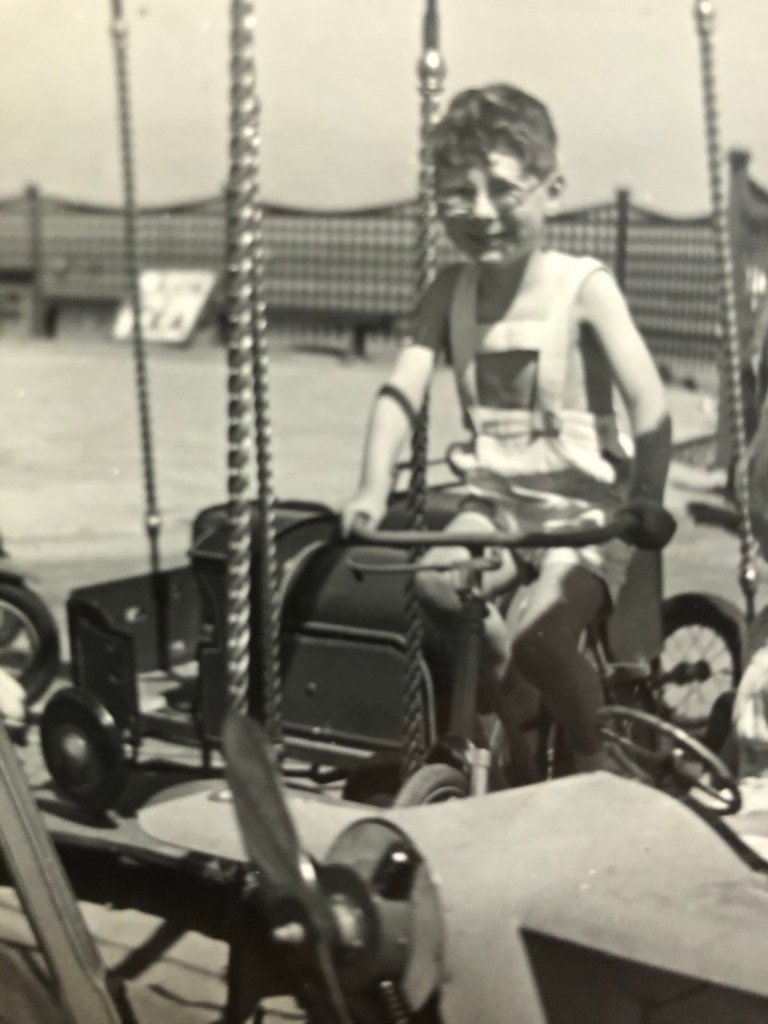
The first “best friend” (apart from Roy Hillyar) that I can remember at school was Keith Eckersley. He lived at the top of Sunnyhurst on Tockholes Road in a house that was bigger and grander that ours. (I was never invited in). He lived with his parents and an elder brother, Jim I think, three or four years older than us, and a fearsome bull terrier called Bill who frighten us kids a lot. He (Keith, not Bill) was always super clean neat and tidy, never got muddy; my grand parents called him the Gigerl, Austrian slang for “Hahn, Modegeck, ausgehaltener Mann” in the Austrian-German dictionary. The family moved to Swindon in Wiltshire while we were quite young, in Standard 2 or 3, so we were not best friends for more than a year or two. And, when I think about it we really only hung out together on the way home from school. Otherwise we had very little contact either at school or at home. He lived too far from us, maybe ¼ of a mile, to be in the normal “gang” that I played with when at home, and it ever he and his friends met up with me and my friends, e.g. in the school holidays or at weekends, the confrontation tended to be hostile.
But for that year or two we regularly went home from school together. Sometimes we went through the woods where there were numerous by-ways and diversions, streams to be dammed,, ponds, ducks and swans, bridges, trees, a band stand, a kiosk – usually closed I think – etc. One thing that surprised me at the time was that I would often get dirty or muddy, but Keith never did. It really was a mystery to me.
Often we went through the Northern Dispatch garage. This was, if you look on the map, above, on the space to the left of Blackburn Road, at the end of Windsor Road, between Earnsdale Road and Avondale Road. Northern Dispatch was a haulage contractor (offices in London, Glasgow and Darwen, no mention in Google so long gone), and we would just watch the comings and goings of the lorries. We never spoke to anyone and no one spoke to us. It was probably dangerous, all those lorries coming and going, but we reckoned we could look after ourselves. It was not a huge garage; there were about 10 lorries in the fleet, and at any given time some were doubtless on the road. There was a magnificent ancient Leyland truck, numbered 2, as in the photo below left but painted red; the other lorries were more modern, Atkinsons and Albions as well as Leylands, more like the photo below right.
I selected the William Bowker truck from Google images: 1930s Leyland lorries partly because William Bowker was a Blackburn company; it was a good bit bigger than Northern Dispatch and there were plenty of Bowker trucks around in Darwen and Blackburn in those days. I would say that lorry number 2 from Northern Dispatch, the one I remember, was longer than the one in the picture. Also, the owner of William Bowker had a son, Bill Bowker, who went to Bolton School with some of the boys I knew from Sunnyhurst including Jim Eckersley, and whom I bumped into occasionally.
Otherwise Keith and I would just meander home from school, occasionally buying a penny tea cake, or even a ha’penny tea cake from the Co-op baker in Blackburn Road, sometimes ringing doorbells and running away. At one time we had a phase of breaking the glass of gas lamps (the street lighting) by throwing a small black hard rubber ball at them; one or two notices then appeared, “WILLFUL DAMAGE. Notice is hereby given …” That’s as far as we read. I pronounced hereby “herby” to rhyme with Kirby, and didn’t know what it meant. We did though call each other “WILLFUL” and “DAMAGE” for a while. There was a variety of ways home, “up Earnsdale”, “up Avondale”, up back streets and various combinations. We talked endlessly, heaven only knows what about. We sometimes saw an old man walking up Earnsdale Road, wearing a flat cloth cap, and he always stopped and stood by a lamp-post about half way up. Once I was pressed into asking him why he always stopped by that lamp-post, and he said that it was to have a rest. He added, “I’m regular, you know.”
On another occasion I was wearing my clogs – a lot of the kids from poorer families came to school in clogs, but real clogs just like the mill workers, dark grey with steel – like horse shoe shapes – on the soles and heels; you could skim you heel along your pavement in those clogs and make impressive sparks. I wanted clogs like that, but all I got from my mother was some twee black clogs with red laces, coloured red along the sides and with rubber soles so that making sparks was impossible. Anyway, there I was, with Keith, whose mother would never have bought him clogs, and we were kicking something along the street (Falcon Avenue). At one moment, one of my clogs flew off, skimmed over the head of a woman who was kneeling at her garden gate scrubbing the step, and landed on her window sill. She wasn’t amused. Not at all. Then I had to ask her, “Please can I have my clog back?”
Now I have, reluctantly and with much shame, to mention my near-death experience. One day, Keith and I were going home together and we had decided to get the bus – for no particular reason, i.e. the bus along Blackburn Road to the Darwen town centre, and then the Sunnyhurst bus home. Keith lived at the top, by the bus terminus.
Keith dashed across Blackburn Road to go to the bus stop and I ran after him, slap, bang into the side of a car coming from the right. A split second earlier, I’d have been under the wheels. As it was, I finished up sitting in the road, shaken but completely unhurt. The driver of the car, a navy blue Standard 10 I think, picked me up, with great relief, when he saw that I was OK and drove me home. I didn’t want that at all. I didn’t want anyone to know what had happened. I was more worried about the three pennies that I’d been clutching in my hand and which had gone flying. I later reported them as lost property but they never turned up. So I was driven home and handed over to, I assume, my grand-mother, as my mother would probably have been working as she did every day except Tuesdays which was half-day closing in Darwen. The man who drove me home knew our family and was a Mr Taylor. My unconscious mind had completely blanked out the telling off I got later. It must have been unbearable.
I already knew all about how to cross a road safely, the kerb drill, etc., but at an unguarded moment, at 6 or 7 years of age, you forget everything, especially if you don’t want to be left behind.
Not long after, another kid, called Georgie Hardman, who was a year behind me at school, was knocked over by a car in the same place, more or less. There was a crowd of kids stand round at the place where it had happened, staring at the blood in the road. It was said that Georgie was in Dr Brook’s surgery, just across the road. I’m glad to say that it turned out that he was not badly hurt.
It was Keith who had a hand in teaching me to swear. Once we were at the bus stop on the corner of Harwood Street and Earnsdale Avenue on the way home. (From there it was two stops to the stop nearest to our house, but four stops to Keith’s). So, really hardly worth waiting for a bus, but 6 to 7-year-olds don’t have to be rational. Anyway, the bus fare for us was a ha’penny, not a lot even in those days. As the bus came into sight Keith said, “Here comes the bloody bus.” When I asked him what he meant, he explained that adding bloody was swearing. I don’t remember that he said more than that. I think that I accepted it as a clear and satisfying explanation.
After the Eckersley family left Darwen for Swindon, (Alresford Road, but I don’t remember the number), Keith and I stayed in touch and wrote letters to one another r occasionally and exchanged Christmas cards. One day when we were perhaps 18 or 19, he phoned to say that he was in Blackpool with his parents, staying with friends, and he suggested that I might like to come over just to say hello. So we (my parents and I, I suppose) drove over; I seem to remember that it was early evening, and we brought ourselves up-to-date with our news. Keith was impeccably dressed in a dark grey jersey with a roll collar and grey trousers (no surprise); we wouldn’t have recognised one another of course, as we hadn’t seen one another for about 11 or 12 years. Anyway, it all went very well, and then we left for home. But that was the end. We never contacted one another again.
Back to HG; the morning assembly was always led by the headmaster, Mr Aspinall, (I would say only in my first year, 1941-1942), then Mr Hacking. It consisted of a hymn, a reading and prayers. I can remember lots of the hymns and the prayers, but not the readings. Here’s one hymn that we sang regularly, what you you think of that? It was number 27 or 28 in our hymn books:
Land of our birth, we pledge to thee
our love and toil in the years to be, (I think we sang, our love and toil for years to be)
when we are grown and take our place
as men and women with our race.
Father in heaven, who lovest all,
O help thy children when they call,
that they may build from age to age
an undefiled heritage.
Teach us to bear the yoke in youth,
with steadfastness and careful truth,
that, in our time, thy grace may give
the truth whereby the nations live.
Teach us to rule ourselves alway,
controlled and cleanly night and day,
that we may bring, if need arise,
no maimed or worthless sacrifice.
Teach us to look in all our ends,
on thee for Judge, and not our friends,
that we, with thee, may walk uncowed
by fear or favour of the crowd.
Teach us the strength that cannot seek,
by deed or thought, to hurt the weak,
that, under thee, we may possess
man’s strength to comfort man’s distress.
Teach us delight in simple things,
and mirth that has no bitter springs,
forgiveness free of evil done,
and love to all men ‘neath the sun.
Land of our birth, our faith, our pride,
for whose dear sake our fathers died;
O Motherland, we pledge to thee
head, heart and hand through the years to be.
(Words: Rudyard Kipling, 1906)
I’m sure we didn’t sing all eight verses, but certainly most of them look familiar.
The prayers, as read by Mr Hacking were always the same, two set prayers and the Lord’s prayer. The first set prayer was the third collect (for grace) from the Matins liturgy, “O LORD our heavenly Father, Almighty and everlasting God, who hast safely brought us to the beginning of this day; Defend us in the same with thy mighty power; and grant that this day we fall into no sin, neither run into any kind of danger; but that all our doings may be ordered by thy governance, to do always that is righteous in thy sight; through Jesus Christ our Lord. Amen
I only remember, at least at this moment, a bit of the second prayer, “ … cherish and strengthen … ” and I wondered what it had to do with cherries. After the prayers of course, there were the notices.
Let’s decide that that’s the end of HG Part 1. It’s a bit arbitrary, but it’s covered all that I can think of specifically up to the end of Standard 2, in August 1944, when I’m 7 and coming up to my 8th birthday on 16 Sept 1944.

 Greenwood family history