The war certainly was very prominent in everybody’s life; in the first years, a great fear of invasion, and when that receded, there were still the black-out and the air raids, it dominated the news (daily and weekly newspapers, magazines and the newsreels in the cinemas, the games we played, the adventure books we read, our toys and hobbies, the films and popular music; everything was in short supply or completely unobtainable and most things were rationed. There were a lot of people in uniform, women doing all sorts of jobs that men had done before the war, everything was blacked out, very little petrol, so very few cars. The cars and buses had their headlights blanked out with black covers with just two or three horizontal slits to let a bit of light through.
Every town had air raid wardens who came round regularly/intermittently to check that there were no gaps in your black-out curtains, and air raid shelters were put up all over the place, or rather, here and there. (But when I think back now, there can’t have been enough for everyone). They were called Anderson shelters and made of red brick with reinforced flat concrete roofs. I think that they had a sign on them to say they were for 50 people. They was kept locked and were just completely empty inside; the idea was that if there was an air raid (there would be a siren) you would go to the shelter, marshalled by one or more air-raid wardens, and you would just wait in the shelter, standing up in the dark until the all-clear siren sounded. We never had an air raid in Darwen. We did have one bomb, dropped it was assumed by a returning German bomber to reduce his weight. It shattered all the windows of the Darwen labour exchange. The following morning, I can remember going there with my dad and solemnly looking at all the broken windows. The fact was that there was nothing worth bombing in Darwen. We heard the German bombers coming over on their way to Blackburn or even to the Barrow shipyards sometimes.
“Before the war” was talked about as if it had been heaven, everything plentiful and cheap, bananas, tinned pineapples, Dinky cars and Hornby electric trains, Schuco cars (a German make with a hand held cable so that you could steer it – you can see lots of them on Google images: Schuco cars). Most sport was semi-suspended, all the footballers and cricketers were in the forces, (football continued as “League North” and League South”), no racing cars in action, no speed records being broken. “Before the war” had included John Cobb breaking records with the Railton Napier, and Malcolm Campbell challenging with Bluebird. You can see these on Google Images too and we said Railton Napier even if Google says Napier Railton.
The tankers delivering petrol were painted grey and had POOL written on them, the different brands of essentials like butter and margarine were replaced by unbranded National Butter, Special Margarine, and do on. In fact, at the time, there were rather few branded products and things were only packaged in a factory if in was unavoidable. Sometimes I’d go to Jones’ Stores after school so that I could then go home with my mother on the bus. I’d arrive there at maybe 4.30 or soon after, and my mother worked till 5.30, I think. Anyway, I’d be put to work making up packets of sugar or tea. Most things were delivered in bulk, e.g. tea chests, and put into bags in the shop. Where I worked you put each bag in turn on a weighing machine (a pair of scales) and filled it using a metal scoop to the right weight from a chest or a sack, a pound for sugar, 4 ounces for tea, etc. In the shop most things were prepared to order when you got to the front of the queue, the cheese, even the butter, the bacon, the eggs, the biscuits, many things were weighed, sliced, cut, counted while you waited, and the queue behind you waited.
So while we’re on about Jones’ Stores, here’s a bit more. The Union Street shop, actually on the corner of the main road, Duckworth Street and Union Street, was the head office as well a shop. There were maybe half a dozen other shops dotted around Darwen, Redearth Road, Richmond Terrace, …. The owner was called Mr Clark and his number two, the manager, was a Mr Aspinall. They were both very kind to me when I was there, and Mr Aspinall gave me half a crown (a fortune for me) occasionally. Once he came to our house for some reason and my mother specially made sure that there was some whisky in the house so that she could offer him some, which he accepted. There were two burly warehousemen, Jim Whipp and ? Rigby. They were also very nice with me and gave me rides in the warehouse lift (I can still smell that warehouse, but I can’t describe that smell). The senior shopkeeper in the front was Ernest, who only had one eye and was also very nice to me. (I guess my mother had a good relationship with all these people). At one point, after my mother had left Jones’ Stores, maybe when she was expecting Jimmy in 1947, Mr Clark sold the business to a chain of grocer’s shops in Blackburn called Thomas Bolton (or Boulton?) I think. So the Jones’ Stores yellow was replaced by Bolton’s red. Before my mother left, I remember that she spent some time training her successor, Josie Carus, how to do the job. I mention that because that was the first time I came across a person called Josie and I remember thinking it was a nice name. Josie, incidently was a member of the Carus family which had the factory that made bandages and medical dressings, as mentioned above. My mother’s job was clerical, basically simple accountancy, by the way, not secretarial. She never learned to type. She also answered the phone and was the receptionist. And just near to Jones’ Stores there was a chip shop, and in those days a simple portion of chips which I was occasionally allowed to buy cost tuppence, 2d. One other thing; once my mother mentioned that Jim Whipp cut himself in the warehouse and came to my mother’s office where the first aid kit was kept. My mother put some iodine on the cut – tincture of iodine was the standard antiseptic in those days- and she was impressed how Jim didn’t flinch at all when she put the iodine on the cut even though it must have stung like anything.
So my mother worked at Jones’ Stores all through the war and was an important family breadwinner after my dad joined up in ?1941/2. He started as a private soldier so he couldn’t have earned much. When I was in the school cadets in the 1950s, it was said that the basic pay of a private was four shillings (20p) a day, 2d per hour, even for sleeping, as sergeants liked to joke. If you search on Google, it says that in 1939 a private soldier was paid two shillings day, so that must have been about what Dad was paid.
I don’t think that fruit and vegetables were rationed during the war, nor bread, nor milk. (Bread rationing started after the war). Most other essentials were, and most non-essentials were just not to be found. I remember the meat ration at one time was 10d per week. So you could choose between a tiny bit of good meat or rather more cheaper meat. Offal and sausages were not rationed. As you’ll remember from Dad’s Army, Corporal Jones had a butcher’s shop and people all tried to get a bit of special treatment from him. We often ate offal, brains, liver, kidneys, tongue, melts, etc. Darwen had several tripe shops, but we never ate tripe. On the other hand, we did eat lungs from time to time. British people never ate lungs, referred to as lights, they just gave them to their dogs and cats. Lights were recognised as human food in Austria though, in German a sort of stew made from lights is called Beuschel. This is something we ate from time to time. You often ate it with bread dumplings, Semmelknödel. I can remember that in Vienna in the 1950s, Beuschel mit Knödel was often the cheapest item on menus. I must say that I liked it.
Adults had buff ration books, bigger children had blue ones – I had a blue ration book with me when I went off to be a boarder in Lancaster – and little kids had green ones, which entitled them to orange juice and cod liver oil. When sweets first went on the ration (1942), the first coupons were handed out as big sheets of paper. When the next ration books were issued, the sweet coupons were included. I can remember going to our local corner shop/post office (Mr Sumner) with my grandfather with our first sheet of coupons and buying some liquorice all-sorts (5d a quarter I think).
So where do we go from here? I’ll tell you what I remember about my dad’s job before he joined up, and the money earned by my grandparents. Then about my dad’s war. Once my dad was in the army, where he started as a private, we really didn’t have much of an income, and there were no savings to draw on. So, from ?late 1938 until he joined up in ?1941/2, my dad ran the Celco umbrella handle factory at Britannia Mill, Darwen, whose owner? was called Hoyland. At some point, the firm was merged with another, from London? And became known as Celco and Richards. The owner? of this second company was called Richard/Dick? Fitzgibbon, and he and his wife also lived in Earnsdale Avenue, near the bottom end, perhaps 200-300 yards from us. They had no children. I was taken to that factory once or twice and had the impression that it was noisy and dirty; there were overhead drive belts driving some of the machines. Otherwise I only remember being shown some swatches of plastic material in different colours and being allowed to to play with them. So anyway, so far as I know, for maybe three or four years from 1938/9 to 1941/2 my dad ran the Celco factory which made umbrella handles.
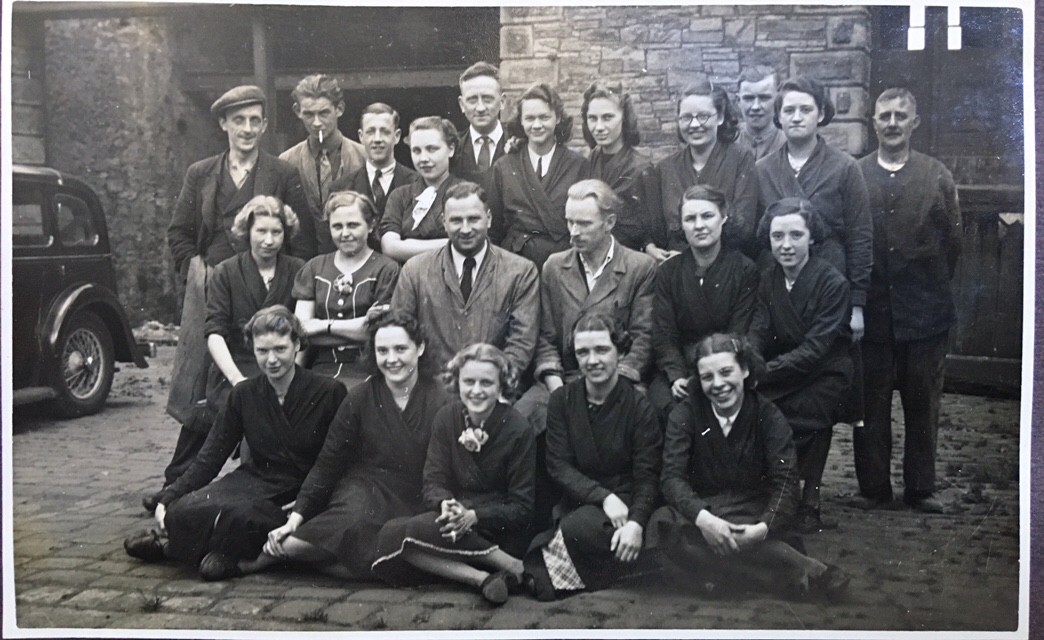
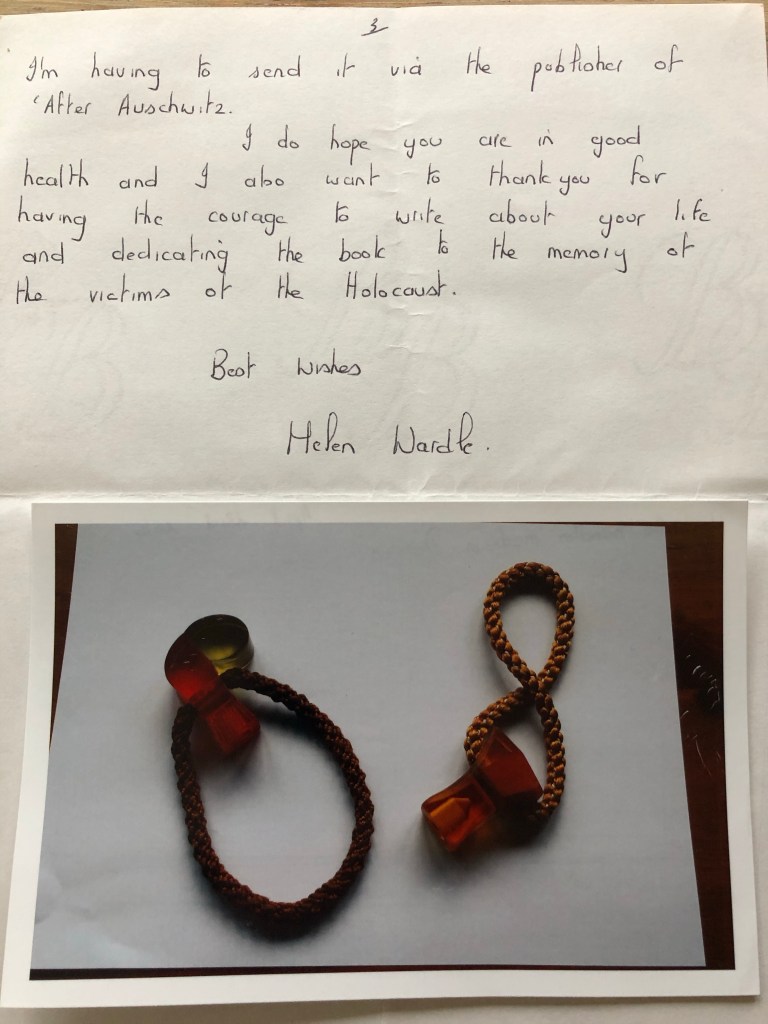
One highlight was in the winter of 1940 to 41 during which there was a lot of snow. On the morning after a big snowfall, dad went to work on skis (it was mainly downhill), and he was just about the only person in Darwen to get to work that day. It was a big story in that week’s Darwen News.
Dad volunteered to join the Darwen Home Guard (9 Company of the Lancs H.G.) quite early in the war (1940?) but he was turned down, seemingly because he was a foreigner and so not to be trusted or ?? So he joined the Blackburn H.G., 10 Company. I remember the company numbers because they were on the flashes on the tops of the sleeves of the uniform. All the people in the H.G. had full standard-issue army uniforms, plus a rifle and a bayonet. My dad was quite scathing at the seeming ignorance/narrow mindedness of the people in Darwen who made the decision to turn him down. I think the main duty that Dad was involved in was “fire-watching” at the Blackburn fuse works. I guess they made fuses for bombs and shells and so were an important strategic target. So far as I know, there was never an incident of any significance, so my dad spent his nights of fire-watching smoking cigarettes and playing cards with his co-fire-watchers. Otherwise, Dad regularly went to the Blackburn H.G. on Sunday mornings, where I guess they were drilled and trained and did exercises. I never in fact heard what he did. Occasionally we saw uniformed Darwen H.G. people running around in the woods and shouting important stuff to one another. The best thing though was that sometimes I was in bed with my mother on Sunday mornings as my dad was getting ready in his H.G. Uniform. My mother and I would ask, “Can we see your bayonet?” and after at first refusing, Dad would then pull it out of its sheath and wave it around ferociously.
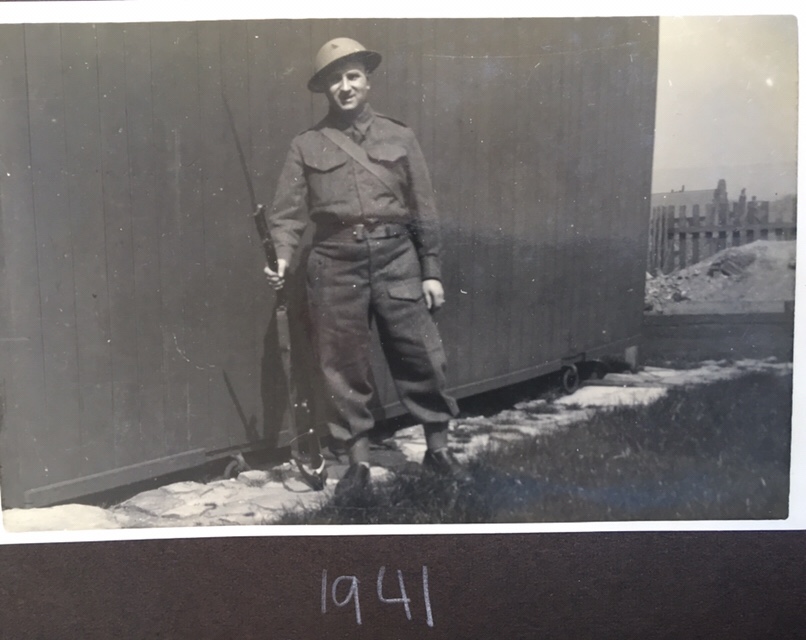
Apart from going to work and to the Home Guard, I really don’t know what my dad did. I think he played some water polo and even a bit of football but I don’t think that went on for very long. My parents main social activity – and I’m not sure when it started – was going to Blackburn International Club. And actually, I think they must have also joined the Sunnyhurst Tennis Club before Dad left for the army.
So that’s about all I can tell you about my dad’s “out of the house” activities before he joined up.
My grandmother had never had a paid job so far as I know but she was quite good with her old, or perhaps not so old, treadle Durkopp sewing machine; it really was very similar, if not identical, to this one that I found on Google images.
Anyway, she began to sew, I think at first for the family – I can remember some very embarrassing trousers that she made for me once when I was maybe four, embarrassing because she didn’t know how to sew flies as on bought boys (short) trousers. Anyway, she must have started by making clothes, dresses, blouses, skirts for herself and my mother, and my mother must have mentioned this to her friends and acquaintances, because women we knew (not strangers) started to coming to her, typically with a pattern and a length of material, and my grandmother would produce the required garment. It all happened in the upstairs living room with the coke stove and all my toys and furniture, (das Kinderzimmer) and I got quite used to having women in their underclothes in my bedroom, trying on what my grandmother had made. So for a period, I don’t know when it started or finished, my grandmother boosted the family income through her dressmaking.
As for my grandfather (I called him Opapa and my grandmother Omama, and for that matter, my mother Mutti or Mummy and my father Papschi or Daddy), early on while Dad was working, his company got an order from the war office for map pins, and my grandfather assembled these at home. Dad set him up with a board with a vice clamped onto it. To make a map pin, you had to hold the pin in the vice, with a vice-like grip of course, and then hammer a coloured top, with a pre-drilled hole slightly smaller than the pin in diameter, onto a pin that was exactly like an old steel gramophone needle. The tops were in several different colours, red, blue, green, yellow, … and were little cylinders with some profiling; they did not have parallel sides. I can’t find any decent pictures on Google images, and all the not-so-good images are encrypted so that I can’t copy and paste them anyway. You can look at them on Google images. I tried all sorts of searches, antique map pins, old map pins, WWII map pins, all useless. Though on WWII map pins, you get some pictures of pin-up girls as seen in WWII.
The pins when finished were about 2 cm long and the plastic tops were made in two diameters, about ¾ cm and 1 cm. The plastic was phenolic cast resin, made by a company called Catalin I think. They certainly don’t make them like that any more. So much for map pins; I think my grandfather assembled thousands of them.
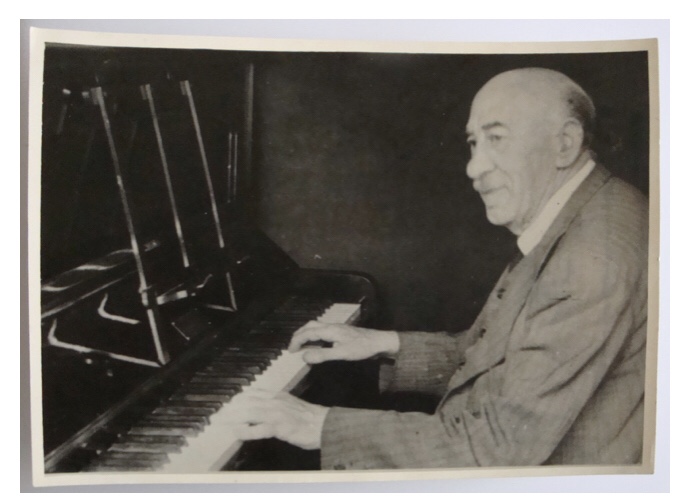
Otherwise, he got work playing the piano in pubs, mainly on Friday and Saturday evenings. A second hand upright piano appeared in our house quite early; it was not from Vienna, was black, the make was Leffler. (No luck searching on Google images). I must have been having piano lessons from Mrs Thomason (or Thomasson) by 1944. There was quite a build up of sheet music in our house, I remember a good pile, so Grandpa must have bought, begged, borrowed the latest hits, to practice them. I can’t remember many titles; there was “Kiss me again, (Bessame mucho)”.
So that summarises how we managed to scrape enough money together to get by.
And having mentioned our piano, here’s the radio we had, an Austrian make, a Minerva Cornette 300A, just exactly like this, which was produced by the Minerva company in Vienna in 1934-1935:
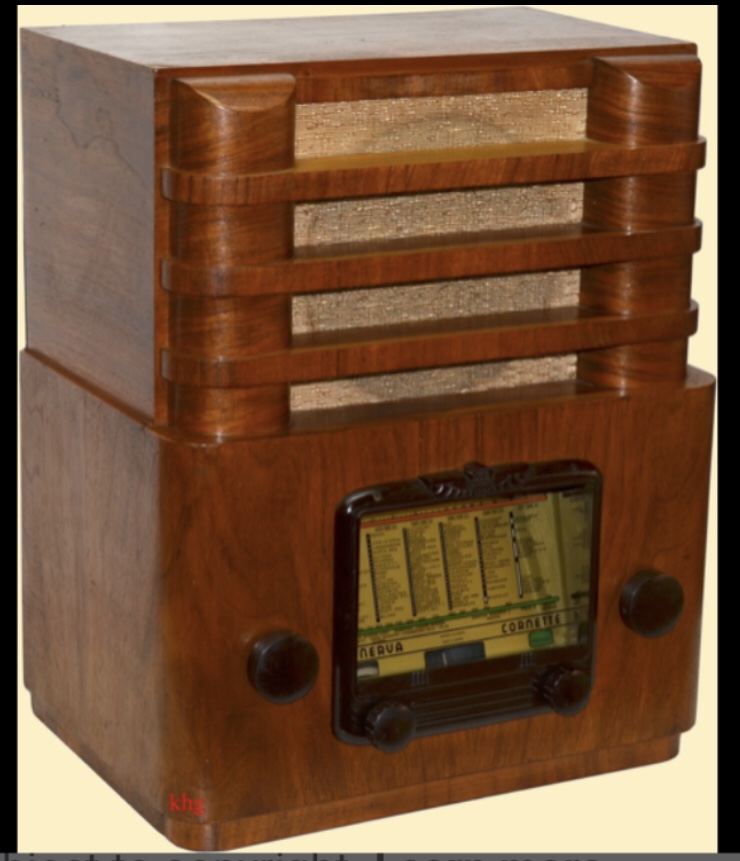
Should I describe it all? There is lots of information on Google and Google images, including circuit diagrams. Anyway, it had three wave bands. The right inner knob set the wavelength. In the photo it’s on short wave; this is indicated by the orange rectangle just above the knob and below “Cornette”. If you turned the knob you got medium wave (grey) then long wave (green). The big right knob is for tuning; the left one is the volume control. The small left knob is the on/off switch plus a bit of tone control.
On long wave, during the war, you had the BBC Forces Programme, later the Light Programme, now Radio 2 on 1500 m, and very little else. On medium wave there was the Home Service, now Radio 4. I was a great fan of Children’s Hour, initially from 5.20 until 6.00 pm, later from 5.00 until 5.55, followed by the weather forecast before the big 6 o’clock news.
My grandfather listened to the news in German regularly on the BBC foreign language service. It always began with the dit-dit-dit-da tone, …-, like a muffled drum beat, three dots and a dash, V in Morse code, for victory. They also regularly played the march, The British Grenadiers, I think at the beginning of the bulletin, which my grandfather found odd, as for him, it was the tune of the Deutsche Wehrmacht march. My earliest memory of a news item in those German language news was the announcement, after months of fighting round Stalingrad that General von Paulus with his 6th army was “eingekesselt”, surrounded. That must have been in late 1942. The final German surrender was on 2 February 1943.
The only and perpetual problem with that radio was with the tuning. As you turned the tuning knob, a light would run up or down the vertical lines on the dial, starting from top left and finally arriving at bottom right. The light also ran along the horizontal line at the bottom and a similar line at the top. The problem was the light bulb lighting up the tuning would regularly work itself loose, and it was fiddly to get your hand in to re-tighten it. So for much of the time tuning was by trial and error.
On the technical side, the only other thing I want to mention is that at some point, my parents acquired an electric turntable with a less heavy pick-up (still for 78 rpm records), and played their records through the radio’s speaker, which gave better sound quality and made it possible to control the volume. With the older wind-up gramophone, all you could do is stuff a sock into the place where the sound came out if it was too loud. The radio had two sockets labelled “phono” at the back to connect the turntable to the radio’s speaker.
I could write pages (at least two) about listening to the radio during the war, the children’s programmes, the comedians, the popular music, etc, but there’s not a lot that really has personal significance. On that score, the first thing that comes to mind is a schools documentary programme that we listened to at (primary) school, perhaps in 1945 or 46, about the C.P.R., the Canadian Pacific Railway. This followed a train right across Canada, starting in ??? perhaps Quebec City, and going through lots of towns, Winnipeg, Banff, … through the Rockies and all the way to Vancouver. I remember, years later, still trying to find Banff, which is pretty small, in an atlas.
I can very well remember often laughing at comedians’ jokes when everybody on the radio laughed, without having understood what was meant to be funny.
After the piano and the radio, I’ll go on to the gramophone, our third source of music during the war. Television was one of those wonderful things from “before the war”.
So, we had a relatively new 1930s wind-up gramophone and a box of records that my parents brought from Austria. I can’t remember the make of the gramophone. It was nothing fancy, a basic wind-up gramophone, with a lid, a carrying handle like a suitcase – it was heavy, the winding-up handle, the turntable and the pick-up, a simple mechanical start/stop switch, a dial for setting the speed of rotation, with a mark for 78 rpm, and another, never used, for 80 rpm, a tray for needles, a sort of shelf in the lid where a few records could be stored. The more I write the more I’m not sure just what I can remember! It used the standard steel needles of the time, which had to be changed from time to time – when they sounded worn out. They were pretty hard on the records, and it was easy to wear out a record that one liked a lot with repeated playing. You could buy little tins of these needles from record shops.
A strange little story. When I began to think about writing about the records from Vienna, I was blank; I couldn’t think of a single title. (Not true; I could remember Donna Clara because Lisl had mentioned it at her 90th birthday celebration last November). There were not so many; my parents were hard up. Perhaps there were 30. Then a few weeks ago, around the beginning of June (it’s 2013), we were asked to give a talk at the Cana week run by the Chemin Neuf Community in Germany where we were signed up to go as helpers; a Cana week is a residential week for couples whose marriages are basically OK, to work on improving them. The title of our talk was to be Amour = Bonheur et Souffrance; in German, Liebe = Glück und Leid. Then I remembered that one of those records, on one side, was entitled, Welcher Weg führt zum Glück? – Which way leads to happiness? So I googled this title and amazingly, there it was on youtube, http://www.youtube.com/watch?v=66kzebiGYzs
Playing this seemed the perfect way to start off our talk. And then I broke a bone in my foot and we had to cancel in the last minute. Perhaps they’ll ask us again next year. So that was a record we had. When I heard the words, I remembered them all immediately. The original recording, as on youtube, is from 1933. You can see the name of the band, the singer, etc. There’s also mention of two other titles we had, Was mir die Liebe gab and Glocken klingen leise. And then I began to remember some other titles, Meine kleine, meine braune Mandoline, Du bist das süsseste Mädel der Welt, Ein stückchen Seide, Wass ist los, denkt doch bloss, … there was an English song called Beautiful, there were two records of Bach solo harpsichord music on the Vox label (which I referred to as Doctor Bach), there was my mother’s favourite, some light classics, sort of, piano solo music. All except two of the records were the standard 10 inch black shellac, but two were a flexible plastic, cellulose acetate I guess, one was green the other yellow.
Once in England, my parents bought a few more records, a selection of the songs from the Disney film Snow White for me, ditto from Pinocchio, then I remember some selections of piano music by Charlie Kunz, Begin the Beguine/Indian Summer, by Tony Martin …
Enough of this self-indulgent trivia; on to the next war time chapters, aux choses serieuses!!
But first, what happened to that radio?; no doubt it was thrown out and replaced by something more modern soon after the war.
And the piano? It was around for a long time, Jimmy practiced on it until probably 1960 or later, but I don’t remember it in Maidenhead after my parents moved there in 1965 – or perhaps I do, yes definitely; it was in the dining room. And then?
And the gramophone and records? My mother let Jimmy play with the records when he was really small, 2 or 3 years old and every single one got broken. I was away at Lancaster and I was very upset about it. I don’t understand why my mother let that happen. I think she just didn’t mind and it kept him quiet for a while. The gramophone? Also thrown out I guess. It wasn’t replaced till much later when my parents bought a big radiogram suitable for 45 and 33 rpm records.
And my feelings about all that? I was certainly most upset about the records. I often played them (on and off) when I was 5 ,6, 7, 8, on my own and with some of my friends… and I really liked a lot of them.
So it’s still wartime and chapters are needed on my dad’s war, my school, my friends, home life and how we ate, health and accident issues, music, the Café Continental, more about the war (“Have you any gum, chum?”), and f’reaven’s sake, most of all, what I was like.


