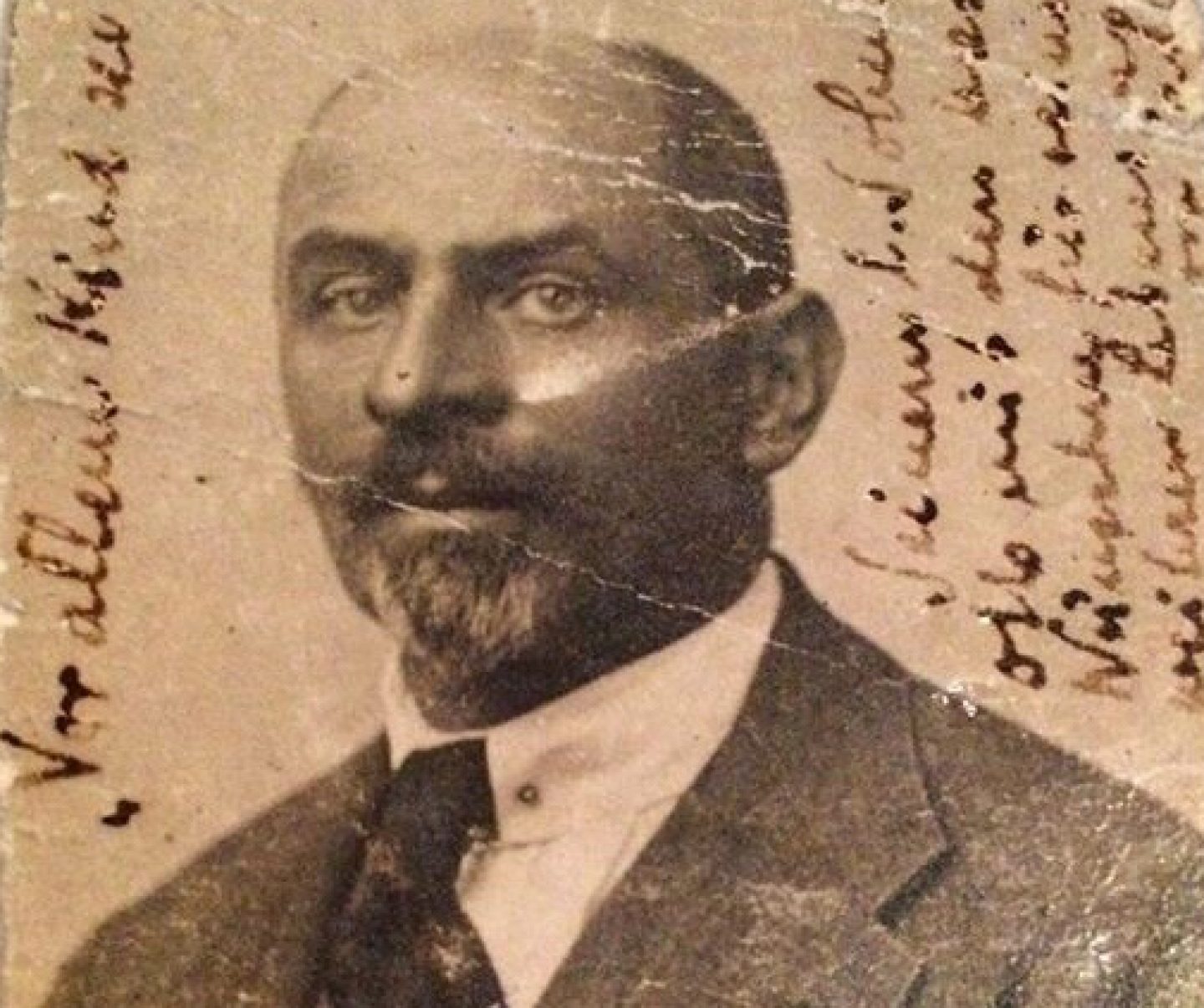
Started 08/08/2013
Chapter 10, Darwen until 1947 …continued
Time to take stock; 1947 is a real cut-off year in many ways. Changing school, no longer being an only child, but also in many ways, leaving Darwen. At Lancaster, LRGS, Lancaster Royal Grammar School, the terms were roughly 14 weeks (Michaelmas), 11 weeks (Lent) and 14 weeks (Summer), totalling 39 weeks. So taking into account seaside holidays, staying with friends, scout camps, etc., I would only have been in Darwen 10 weeks per year at most. Added to which, changing schools, as you’ll remember yourselves, means largely changing friends and not seeing the primary school friends any more.
Topics I’d still like to cover before moving on to secondary school include (I don’t want to forget any):
family life (daily and weekend, mealtimes and bedtime, home comforts and lack of, health matters, discipline, shops and shopping, pocket money, reading, family holidays, pets, visits from relatives, the arrival of Jimmy), …
friends up Sunnyhurst, playing out (the field, the woods, the moors, the road, the ruins, etc.), playing in, birthday and Christmas parties,
other interests (cubs, Sunday schools, swimming lessons, piano lessons, cinema, Blackburn Rovers, stamp collecting, Blackburn International Club) – it’s all getting too much. Plus I need to say something about what I was like and how I was developing.
So I’ll start with sex. How about that? Don’t panic! Just to say – it needs to be said – that, as already agreed with both of you by telephone, these memoirs will not say much, if anything, personal about sex. It’s a well known fact that kids don’t feel comfortable contemplating their parents’ sex lives. So no worries, you don’t have to. It’s also a well know fact that the average man thinks about sex every eight seconds. No comment. Less well known perhaps – the average schoolboy thinks about sex every four seconds. And it’s also a well known fact that parents don’t feel comfortable with their kids contemplating their sex lives. So now everyone is happy.
What I would like to say is that I think I’m within the normal range of normality. I know that’s begging a thousand questions but you know me a bit so you can draw your own conclusions. Incidentally, I remember vividly that “begging the question” was one of the expressions that caused me such difficulty with my English homework in Standard 4A.
Family life in Darwen. Throughout the war, and I guess until 1947, there was no fridge, no telephone, not much heating, just the coke stove in the Kinderzimmer and coal fires downstairs. All the bedrooms had fireplaces when we moved in (which never saw a fire); they were all removed when we had central heating installed in the magic year 1947 or thereabouts. Hot water was via the electric immersion heater in the hot water tank in the bathroom. Early during the war, the king (George VI) announced that in the interests of energy saving, he was restricting himself to baths with a depth of no more than 6? or 5? or 4? inches (I can’t remember everything, but four inches sounds right) and he appealed to his loyal subjects to follow his example. No need to appeal to the Grünwald household. By the time the bath was four inches deep, the hot water had run out and the hot tap was running cold. Incidentally, the immersion heater was in the airing cupboard. It was the only cupboard in the bathroom, and was fitted with two rows of slatted planks à la classic British airing cupboard. Only the Grünwald household had never come across airing cupboards so for us it was just the bathroom cupboard where we kept all the usual bathroom clutter. Not long ago, I wrote to the Guardian’s Notes and Queries page, asking why British houses had airing cupboards, but Austrian, Swiss and French ones didn’t. My query was not published and I still don’t know the answer. Perhaps British houses at just so much damper than all the others!
Our modern gadgetry included a washing machine, an iron but no vacuum cleaner. Our upright Hoover must have arrived around 1947. Before then, carpets were swept or, for the smaller ones, hung on the washing line in the garden and beaten with a carpet beater.
Before we leave the bathroom though, I can add that there was no baby bath for me when I was two and three years old, and I can still remember my mother bathing me in the washbasin. Later, while I was still pretty small, my mother used to get the bath ready, have me ready undressed to get in, and would then cradle me in her arms and rock me and sing, (her own composition, I assume), “Schwenken, schwenken schwenken, kleines Lumbatzie,” and then put me into the bath. Once, she slipped, got me into the bath safely, but hit herself quite hard on the edge of the bath, and, I think, finished up with one or more cracked ribs. It was certainly painful for her and I remember she had some strapping round her upper middle for a while. Hair-wash night was Saturday, and I can remember making the usual fuss that children make about that. My mother squeezed out my flannel and folded in in two , and I held it over my eyes to keep the soap out (no shampoo till after the war).
And one last thing; the wash basin in the bathroom stood on a pedestal that went down to the floor. One day, when I was still pretty small, I wanted to reach something high up and so I climbed onto a stool, then onto the washbasin, which then came away from the wall and keeled right over. I can’t remember who gave me a good telling off about that … And one more last thing; if ever my dad came home from work whilst my mother was bathing me, he would switch off the bathroom light, which was outside the bathroom, plunging us into total darkness, if it happened to be dark, that is. We were never amused by that and would yell and yell at him to put the light back on. It was quite a negative thing and a first experience of my dad’s insensitivity. That and the fact that if ever he fooled around with me, tickling, mock fighting, etc., he was often too rough and finished with me in tears and my mum telling Dad to stop being too rough.
The Hotpoint washing machine (Google images is a total let-down) was in the “pantry”, a small room beyond the kitchen, into which the back door opened. The house had a good front door (expensive, as Johnny for one knows) and a much less good back door which swelled with the damp every winter so as to be almost impossible to open and close; I remember shoulder charging it regularly to get into the house. So back to the washing machine; it had a tank with an agitator to do the washing, and an electrically driven mangle for squeezing the water out of the clothes. Filling and emptying the tank was manual, the machine was not plumbed in, and everything was basically manual. The mangle had (light green) hard rubber rollers. Once my grandmother got her fingers pulled into the rollers as she was trying to make a last minute adjustment to the item going through. Fortunately there was a safety mechanism and the rollers jumped apart to free her fingers, but they still got a good pinching and poor gran got a severe fright, and I think, an oval wedding ring. So, the pantry was the laundry room (one said “wash house” at the time) plus the larder. There was also a largish wooden bin for old newspapers, which we saved and handed in regularly as “salvage”, as part of the war effort. My grandfather also regularly chopped firewood there. There was a pot sink in both the pantry and the kitchen.
The kitchen was also small, even tiny. We had a sort of table on one side with a lower shelf on which a free-standing white gas oven stood, and an upper top for the three-burner gas cooker to stand on. It all looked extremely foreign.
In fact, neighbouring houses older than ours still often had a range in the kitchen/living room where a coal fire was always lit and there was an oven and a horizontal plate for standing the kettle on. The whole range was kept black. The picture shows how they looked. The fire also heated the water; in fact, now I think about it, even in our house it was possible to heat the water from the coal fire in our sitting room, if we had one lit, which was nothing like all the time. I don’t know how it worked. It was called having a back-boiler.
And now, back to the kitchen and how we ate – very important. As I mentioned, neither my mother nor my grandmother had ever cooked or even learnt anything about cooking until we arrived in England. Then very soon, my mother was out working, and Omama took over the kitchen. In fact she very much dominated my mother in many/all respects. I remember that as my mother was rushing to catch her bus to work on weekday mornings she would – in the early days, I suppose – say good-bye in German to her mother by calling “Küss die Hand, Mama”, literally “Kiss your hand, mother,” and my grandmother would grumble that my mother was a grown woman and should not be using such childish/girlish expressions.
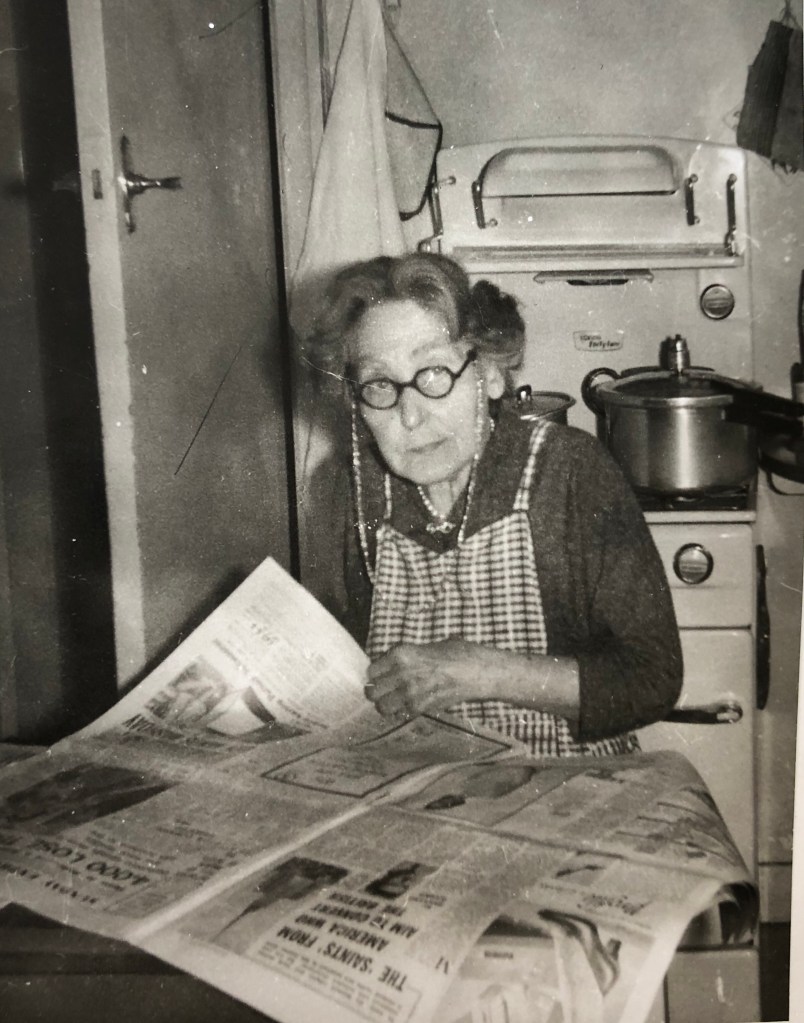
My early memories of how we ate are a jumble of clear and confused, of vivid and cloudy. Very vivid is the memory of soup. My grandmother made soup every day, always home made (no other choice, I guess); she made her own stock using bones which she got from the butcher and boiled with onions, carrots, etc. Often there were clear soups with various sorts of dumplings, very Austrian, semolina dumplings (Griessnockerln), dumplings made from melts (Milznockerln), many others too.
Anyway, before I continue, it’s important to think a bit. I could ramble on about wartime food for quite a long time, so I’ve got to pick out highlights and not just go on and on and on! In that case, we’ll make the soup story highlight number one. Having said that my grandmother served up her home made soup every day, I have to say when this was. I would say only at lunchtime, never in the evening, but I’m not sure. Anyway, she made lots of different soups mostly very good, but I did a fair bit of complaining about not wanting to finish my soup, not liking it, and so on. And there was plenty – when I was small – of “one spoon for Mummy”, “one spoon for Daddy”, … In the Struwwelpeter book of cautionary rhymes for bad kids, there was one about the Suppenkaspar, describing the terrible end of the boy who refused his soup. Here’s the German original with the original 1845 drawings that I remember; you can also find an English version on the internet. In any case, I was not convinced at all.
Soon after the end of the war, we had a visit from a Frau Schwarz, one of my grandmother’s best friends from Vienna, who had emigrated to the USA before the war. She came with her daughter Kiki, son-in-law and grandson; at the time, I’d have been about 10 and the grandson was a lot younger, perhaps five, so we didn’t have much to say to one another. Incidentally, Kiki, who’d have been about the same age as my mother, was the most beautiful woman I had ever seen. I was definitely impressed. At lunch time one day, I made a fuss about not wanting to finish my soup, and Frau Schwarz, who was really nice, very jolly and amusing, solemnly assured me that in years to come I would look back and remember my grandmother’s soups and think to myself, “ If only, just once, I could have some soup like my grandmother used to make …” (“Wenn ich nur noch einmal so eine Suppe …). That remained a family joke for years and years.
My memories of the time and form of meals is very sketchy. In fact, most of my early memories are distinctly in the “I seem to remember” category, and may be mistaken. Up till 1947 and perhaps a little later, the smaller downstairs “reception” room was used as the sitting room; that’s where there was the fireplace with the back-boiler. That is also where we had the radio, the huge Austrian “three piece suite”, a standard lamp. The larger room was used as the dining room. It had a long sideboard, also from Austria, originally black but later repainted brown, which was still at High Crest in a shortened version when my dad died in 1997. In fact, as already implied, all the furniture was from Austria; it was quite old but not antique. It must all have belonged to my grandparents since or soon after they got married in 1904, and the rooms in their Austrian flat must have been quite big for it all to fit in.
So the room we used as the dining room also had the “dining table”, in fact a large square card table, which would just seat four adults and a child at a pinch. It stood on a single large central square foot/plinth, which had a little cupboard built into it which I regarded as my secret cupboard. There were four dining chairs, two with arms, two without. When we were five, i.e. my parents, grandparents and me, I don’t remember what we used as a fifth chair, a stool for me? When we were more than five, there was a larger board that folded in two on hinges (and was kept under the stairs in the sitting room next door) which was put on the table and opened out to give a square table that would seat up to eight.
Now I remember … there were three or four other upright chairs with woven cane backs as shown (right) and cushions on the seats that were fixed to the legs with cords with tassels at the ends. They were rather heavy and distinctly wobbly when they got old. You may even remember the last survivor(s) at Tall Trees, by which time the cane backs had green velvet covers pulled over them. The large folding board was also used for ironing (did ironing boards exist in those days?) and for rolling out pastry, as when you were making an Apfelstrudel.
I don’t remember much about how we had breakfast. I don’t remember sitting round a table as a family at breakfast time, except perhaps at weekends. I always had cocoa to drink, see below, and I guess just bread and jam. Breakfast cereals were unheard of till much later. The first time I became aware of the existence of marmalade was at Hollins Grove school, when Derek Westwell mentioned that he didn’t like it because it tasted of chemicals. Perhaps there was sometimes a boiled egg at weekends. Otherwise I’m blank.
So now to the matter of cocoa. When I was small, I had cocoa for breakfast and at bedtime, I think every day for years and years. It had to be Rowntree’s cocoa, and all the alternatives like Cadbury’s (there weren’t many others, if any) were a bit different and totally unacceptable. It was just cocoa powder, unsweetened, and it really needed to be cooked. My grandmother would heat milk in a saucepan, spoon in some cocoa and mix it in quite energetically with a wooden sort of whisk. (Ein Sprudler). When it was hot, she’d stir in some sugar, and serve it up in a mug. I managed to train her to make it perfect every time and she knew that if it wasn’t exactly as I demanded it, there would be some very energetic screaming and complaining. Ditto if all the skin which always formed was not completely and perfectly removed. Here’s a picture of the tin. Later in the war there were no more tins and it came in a carton that was the same size, shape and design as the tin. You can see a picture on Google images. More and more pictures on Google images are encrypted by the way, so that I can’t copy and paste them. I searched around elsewhere on the internet for quite a while until I found this photo that would let me copy and paste it.
In the evening, my predominant memory is of meals on my own, often semolina pudding (Griessgasch – that’s how it’s pronounced) which I quite liked, especially if it had a knob of butter and/or a piece of chocolate stirred into it, or failing that, a spoonful or two of a mixture of cocoa and sugar. It was just like porridge, but made with semolina instead of oats. Perhaps there was also something else, a fruit or a boiled or scrambled egg. I remember lots of times, eating boiled eggs with “soldiers”, strips of bread, to dip into the runny egg yolk, and also eating scrambled egg made in one of the special little shallow two handled pans we had (Reindl) for that purpose. Then at bedtime it was cocoa and I think sometimes a biscuit or other snack.
Before I forget, there was a big Austrian cookery book with hard blue covers called, “Was koch ich heute?” It had some photographs of dishes which I remember poring over. The most horrible one, not a dish at all, was to show you how to kill your carp by tapping/bashing it on the head with a mallet. The other picture I remember best is of decorated hard boiled eggs, the eggs cut in half crosswise with the yolk on the inside, so you just had a white hemisphere with two eyes and a big mouth added, called Froschköpfe, frogs heads; I don’t know how many times I begged my mother and my grandmother to make them but they never did.
A bit more about my vague memories of mealtimes; first of all, as you’ll remember from your years in Lymm, the meals in English were straight north of England “working class” language. The mid-day meal was “dinner” and the evening meal, relatively early, was “tea”. A slightly grander “tea” was “high tea”. I remember my grandfather making afternoon tea occasionally at around 4 p.m., a pot of tea and bread and jam, often with nothing else, i.e. no butter or margarine. He would serve this up downstairs, I can’t remember where, and we (Grandfather and I) would call upstairs where my grandmother and mother would be working in the Nursery/Kinderzimmer to say, “Tea is ready”, and then we’d all have our bread and jam and tea together downstairs.
Also, my mother’s half-day off from work, the Darwen half-day when all the shops were closed in the afternoon, was Tuesday. For a while, my mother would prepare a “tea party” for me for when I got home from school on Tuesday afternoons. I remember this was held in the sitting room, at a little table by the French windows, just my mother and me. She would always try to make a treat of some sort, to make it a bit special, a piece of cake, some biscuits, some stewed apple. It was often a special time for me.
Other general remarks; when we were all together for lunch, as at weekends, my father was always served first and started eating straight away. (My grandmother served each person in turn). He’d often finished before everyone else had been served. As I got older, I found this just awful and I said some pretty critical things, but it made no difference. My grandfather had had dentures, false teeth as I said at the time, as far back as I can remember. His dentures were not a good fit and they regularly made a clattering noise as he ate. I would often find this unbearably irritating; I knew he couldn’t help it but sometimes I wouldn’t be able to stand it any more, and I’d burst into tears and say something I shouldn’t have or just run out of the room.
At lunch time, after the daily soup, the main course was usually some sort of meat or fish, with potatoes and a vegetable. (I was told not to speak while eating fish, in case I swallowed a bone. I was also taught not to cut potatoes with a knife but to break then with a fork – Austrian manners). I remember some occasions, not many and probably mid-week when the main course was just lentils or just cabbage. I have to say that my grandmother always cooked the lentils in a way that was delicious, and also she cooked cabbage, both green and red, really well. Not just boiled in water, but always in a sort of white sauce, really good. I don’t know how she did it. Presumably it was just the normal Austrian way. However, there was once occasion when it was just cabbage for lunch and I complained, “Nur Sauerkraut?” In fact it was not Sauerkraut at all, I’d never seen Sauerkraut at the time, I’d barely heard of it (it’s sour because it’s been pickled in vinegar) but it got a good laugh, at the time and on many later occasions when the story was told. I only have positive memories of the vegetables cooked by my grandmother; she would also make peas and carrots, for example, in the same sort of sauce, really good. I remember that she always started those sauces by making a roux (Einbrenn), but after than I don’t know what she did.
The meat ration was tiny, as I’ve mentioned, but offal was not rationed so we ate just as much as we could get hold of. Not just lights, but liver, kidneys, brains, tongue, just not tripe or pig’s trotters, etc. My grandmother made the most delicious ox tongue in a raisin sauce, which I liked very much. However, once again, it was foreign and this bothered me a lot, as I’ve already said. In England, the normal way of eating ox tongue was to cook (boil?) it, then press it in a bowl under something heavy, and slice it cold, as an alternative to ham in salads or sandwiches. So that is what I wanted but no one in our household had the first idea of how to do this. So for years I had to enjoy the delicious ox tongue in raisin sauce wishing it was pressed, cold, pink slices.
Another thing; when we had pork, my grandmother would always remove the skin and much of the fat before roasting it (so that there was no crackling). Instead, she would then cut the skin plus fat into small pieces and fry it. She would then pour the liquid fat, in fact lard, into the big jar of lard that she kept. This would then be used as required for frying. The remaining fried pieces, the pork scratchings I guess, Grammeln in Austrian German were then eaten in the kitchen with dry bread and a bit of salt. Delicious; a good memory. Whenever we had a roast, it was always cut into slices in the kitchen; no question of my dad or anyone else carving it at the dining table. In those days, chicken was an expensive rarity. When Dad told us that the soldiers in the American army had chicken every week, half a chicken per man, it seem just incredibly luxurious to us.
There were potatoes at almost every main meal, often boiled, occasionally mashed, or sliced and sautéed. Sometimes my grandmother fried some onions and stirred them into the mashed potatoes and that was delicious. She always put enough milk and butter/margarine into the mashed potatoes (if possible) to make them into a not-too-stiff purée. We had rice occasionally, pasta was unheard of till well after the war. Another treat was potato noodles, potatoes mashed, rolled into noodles, bread-crumbed and baked(?). A lot of work to prepare but wonderful. Talking about bread-crumbs, my grandmother regularly put the stale bread that she’d kept into the oven to make it go crisp (to crispen it – is crispen as word?), then she would grind it into crumbs in her special machine, a bit like a mincing machine, called a Bröselreiber (crumb-grinder) and refill her bread-crumb tin. We regularly had Wiener Schnitzel, always made with pork and not veal which would have been the real thing; it needed a coating of flour, then egg and finally bread-crumbs – I liked helping with that; you put flour onto a plate, egg with the yolk mixed in onto a second plate and the breadcrumbs onto a third plate – before frying; sometimes when there was no meat, there was panierter Fisch, and occasionally panierter Kürbis (marrow) which was not fantastic. Imagine the disappointment when a dish of “paniert” food is dished up and you realise that it’s marrow not meat.
Years later, when driving along with Uncle Peter, if he got stuck behind a slow car, he would call it a “Bröselreiber”.
This is just what I said that I wouldn’t do – go on and on about food. But I’ve got to say a bit about cakes and desserts, haven’t I? There was always a Gugelhupf at birthdays. In the early days it was made with a dough made with plain flour and yeast, which had to stay by a fireside, somewhere warm, for the dough to rise. Later, my grandmother switched to self raising flour, which was easier, at least in our often chilly house in Darwen. The Gugelhupf was always served first at breakfast with coffee. Again, in the early days, it was always plain, but later my grandmother added currants to the mixture or made it marbled, part plain, part chocolate. There was not much baking during the war because of all the shortages. My mother in particular would reminisce about the cakes with whipped cream that one could buy or make before the war.
My grandmother made an Apfelstrudel occasionally; this meant rolling out a large sheet of thin pastry on that big board that I mentioned – above, so it was always quite a performance. Just once and never repeated, she made deep fried jam doughnuts, (Krapfen), with dough that had been made with yeast. I still remember them as the most delicious things imaginable. But they were just too much work, waiting for the dough to rise, getting the deep frying set-up organised, ….
That’s enough about food, except … My grandfather always had a tin in his pocket with a few small sweets in it; or at least some thin slices of Mars bar. It never failed in an emotional emergency. When I wanted a sweet for no good reason, I’d go up to my grandfather and say “Aaaaah,” (that was in German of course), and sometimes I’d be lucky and sometimes not.
Now a few words about sickness and health. I’ve already mentioned my inability to keep food down when I was newly born, and how this somehow got sorted out. (Johnny also puked a lot when he was tiny; a milder version of the same thing?)
I can’t remember a time when I did not wear glasses as a child; I must have started before I was three. There are photos of me with a squint even when I’m one year old. It was always assumed that I’d inherited this from my mother. The squint was never really bad; my mother’s, and my cousin Marianne’s were a lot worse. So I always wore glasses, initially to correct the squint and later, when I was ?? 8 or 9 to correct astigmatism as well. When I was perhaps 14 or 15 I stopped wearing them out of vanity, and did not start again till I needed them for reading in middle age. The squint was a bit erratic; for example it was almost not noticeable some of the time, but got worse for example when I was tired. One specialist I saw said it was like a stammer with my eyes. Anyway, having it corrected by an operation never came into question. Once, when I was 5 or 6, I had an appointment with an eye specialist at Blackburn Infirmary, a Dr Wishart. He didn’t see his patients one at a time in privacy, in an office, but sat at a desk with all his patients forming a queue in front of him. So everybody could hear what was happening with each patient (did I ever tell you this story?) It seems Dickensian when I think about it now. Anyway, when my turn came, Dr Wishart asked me to look at a finger that he held up, and then asked/told me to keep looking at it as he moved it from side to side, which I did, but by turning my head. So he said I should follow his finger without turning my head (i.e. he meant I should do so by just moving my eyes, but he didn’t say this). Anyway, I didn’t understand that this is what he wanted me to do, so in great exasperation he said to all the people in the queue, “Is this boy deaf or daft?” So then I was led away in tears by my mother.
The other thing that happened at about that time – I was in Miss Hargreaves’ class so I’d have been five – was that I had a broken arm, the right one, luckily, so I could write and do normal school work. Did I tell you about this? The way it happened was that I was playing out with several kids of about my age, and for some reason, we found ourselves in the Thomason’s/Thomasson’s (?) garden, just down the road from us; more about the Thomason’s later. They had one child, a son, Colin, who was a fair bit older than us; he’d have been maybe 9 or 10. He offered to give us piggy backs, we called them donkey rides, round the garden. He made us form a queue, with the front of the queue on a bank so that it would be convenient to get on his back for the ride. When I was second in the queue, I pushed the kid in front of me – Alan Hull – bigger than me and a year older – off the bank, and he turned round, grabbed one of my legs and pulled, so that I fell off the bank … and broke my arm. I can remember getting up, holding my broken arm, and running home screaming, with Alan, very worried and troubled running behind me. I can also remember thinking as I ran that my arm would always be broken. I had no idea that it could get better. After I got home, I don’t remember much, till the doctor, Dr Brooks, our GP at the time, arrived. He set the bone, which was extremely painful and made me scream a lot more, and put splints onto my arm (forearm) and put my arm in a sling. The whole thing happened in the late afternoon or early evening, and I guess I was taken to hospital, Blackburn Infirmary, soon after, though I don’t know when, the same day or the following day. The weather was mild, so the whole thing must have happened in the spring, I guess. I remember having the arm put into plaster of Paris in the hospital and it began to dawn on me that I didn’t have to have a broken arm for the rest of my life. I remember that the plaster was put on by a grey haired doctor who seemed very kind and was wearing a reddish rubber apron. I think his name was Dr Kyle.
I then spent however long it took with my arm in plaster; it was not much of a problem to me it seems. Then one day we went to Blackburn Infirmary again and the plaster was removed, cut open with some shears and pulled off. The next thing I remember is that a nurse asked me if I was brave, and when I said “no” she put the arm over her knee seemingly trying to break it, and making me scream a whole lot more, but nothing dramatic happened. I was then, some time later, told that the arm had not been set properly and would have to be re-broken and set correctly. (Years later it dawned on me that that nurse had realised that the arm hadn’t been set properly and had a go at straightening it out or re-breaking it then and there so as to re-set it). By the way it was not a clean break, it was called a green-stick fracture, presumably analogous to the way a green stick doesn’t break cleanly. So on the appointed day, I was taken to Blackburn Infirmary again, was put to sleep with chloroform – a big pad of cotton wool soaked in chloroform was put on my face. I then had a peaceful dream of a toy train going round and round a track, and then suddenly everything went wrong and it turned into a nightmare (clearly that was the moment when they re-broke the arm). I woke up vomiting horribly and was driven home in an ambulance, with my mother sitting by me. I felt dreadful and kept asking my mother to ask the driver to drive slower. I think he slowed down every time I asked, but then after a while he speeded up again and that this happened a few times. I certainly kept asking for the driver to slow down and when he did, it was not quite so awful. I guess that they’d put my arm in plaster again though I don’t remember that, but I presume that after that, the arm was in plaster and in a sling again for as long as it took, and then the plaster was removed again, end of story. Except I seem to remember being told that when I arrived home screaming with my newly broken arm, my mother fainted; but when I queried this with her years later, she said that this was definitely not true.
I must also add that just before, I had a general anaesthetic at the dentist’s, a Mr Grundy. He told my mother that one of my milk teeth needed to be removed because it was decayed and that he would give me “gas” to put me to sleep. I seem to remember that I had the same dream, then the same nightmare, as when my arm was re-broken. I remember that pretty clearly. Again it must have been a light anaesthetic. In the event he removed three of my milk teeth, three lower ones in a row. The anaesthetic must have been nitrous oxide (laughing gas) but it wasn’t funny and we never went to Mr. Grundy again. While on the subject of teeth, the whole of my family had a distinctly low opinion of British dentistry. As witnessed for example by the people working in Dad’s factory, it seemed to us almost a rite of passage of the British working classes, men and women, to have all their teeth pulled out when they reached the age of 21 or so. Then you had a denture fitted, no more toothache or dentist’s bills for the rest of your life. My parents eventually found a dentist in Blackburn who they found acceptable, a Mr Cormack, in Preston New Road. I remember that I was sent to the dentist regularly and needed one or two fillings every time. I had a mouthful of fillings by the time I was 10; then they seemed to need replacing pretty frequently. For a while I was taken to a Mr McCarthy, whose father was also a dentist and lived near us in Earnsdale Avenue. He died (the young Mr McCarthy that is) suddenly of a brain haemorrhage when he was about 32 of 33. After that I was taken to a Mr Bromley to whom I continued to go until I finally left Darwen in 1959. I don’t think he was great and he wasn’t painless. Once early on he showed me a really big model railway engine that he had and which was really impressive. Or perhaps this belonged to his brother who was also a dentist.
So that’s my eyes and teeth dealt with; I suppose I should have had a brace on my upper teeth but no one thought of that. No problems with my ears or nose! As childhood illnesses, I vaguely remember having measles and less vaguely remember whooping away and fighting for breath with whooping cough. One other thing; once I was at Sunnyhurst Tennis Club with my parents, also when I was small, perhaps six. I was sitting in a deck chair watching (or not) the tennis when one of the members, a young man whom we knew a bit, came up behind me and started to lower the deckchair as a joke. Unfortunately I had my little finger in the angle between two of the side elements of the deckchair so it was trapped as the chair was lowered. Once again I did a lot of screaming and the finger was very bloody and bruised but amazingly, no bones were broken. A very embarrassed and apologetic young man!
Finally, so far as my health is concerned, I had chilblains on my toes every winter until I was well into my teens which was miserable and for which there seemed to be no treatment. Actually, one year I was prescribed some tiny pink pills, which made me glow all over; they must have boosted my blood circulation or dilated my blood vessels, and they did help. They were never repeated so perhaps there was something unsafe about them.
The rest of the family had really no health problems that I can remember. Nothing worse that the odd cold and very rarely, a bout of ‘flu. Dad really seemed to be fit as a flea until he had his stroke at 83; my mother ditto until her cancer. Apart from the cracked rib(s) I mentioned, and a time when she scalded herself with a Christmas pudding, she never had anything. After Jimmy died, she never recovered, but I’m not sure whether she had a depression or psychic illness; I tend to doubt it. She just couldn’t cope with her grief, that’s for sure. Some professional counselling would have helped no doubt.
My grandparents were also never ill until Rudolf’s final illness at 76/Helene’s broken hip at 84. And Jimmy never had anything worse than chickenpox. He did have to have an operation on a hernia, as a teenager I think; and he once had to have his nose cauterised because he had so many nose bleeds. Actually, my mother did have something serious, I don’t know what, around 1960. It was after I’d left home and was working in Birmingham, and after she was better, my father did say to me, “… we nearly lost her”.
In conclusion, on health matters … I really think we were all basically blessed with good health. My mother was the least robust, I would say, and in no way the fighter that her mother and sister, … and Dad and Eva were/are. Where do I come in all that? I wonder. Would I have survived nine months in Auschwitz at age 15 like Eva did? I often wonder.
So now to bedtime; and before I forget, we had a glass showcase (die Vitrine) in the sitting room. This contained among other things a small quite elegant statue of a white alabaster dog, lying down. Sometimes, when all the other tactics for delaying bedtime had been exhausted, I would insist that I couldn’t go to bed until I had kissed that dog “Good night”. Which I was invariably allowed to do. Whatever happened to that dog? Whatever happened to the Vitrine?
Actually I don’t think that getting me to bed was often a battle. Bath time, cocoa, teeth cleaning, bed time story; my memories are mainly of that. I guess there were times when I was in the middle of something, or playing out, and resisted calls to go to bed, but it seems to me that that was exceptional. I remember once when we, a group of kids that is, were playing cricket in the field behind our house, I asked my mother beforehand to call me it at a certain time, because I wanted to avoid my turn at batting. This she obligingly did, and I put on a good act of not wanting to come in, and she put on a good act of insisting that I had to come in immediately.
All the time that my dad was in the army, my mother and I prayed for him and for Fritzi and her family in Holland every evening. First we said a prayer in our own words, then the Lord’s prayer and one of the prayers from the prayer book evensong service, “Lighten our darkness we beseech thee O Lord … ”.
I was afraid of the dark so after the lights were turned off, I insisted that the bedroom door was left half open and the landing light left on. (Sounds familiar.) As the stove in the bedroom went out and cooled down, the furniture used to make cracking noises which often terrified me. There was one big wardrobe in particular in the bedroom that made these cracking noises as it cooled down. Don’t tell anyone, but I’m still afraid of being alone in the dark today.
I can also remember saying those prayers with my mother sitting in my dad’s bed. My parents had twin beds, and while my dad was away in the war, I was sometimes allowed to sleep in his bed. As I started this, I thought I’d have quite a lot to say about the stories that my mother read to me at bedtime, but not much comes to mind right now. Stories from Rupert books, …, The first story ever, from my first Rupert book, the last hardback, before they went soft-backed for the duration of the war. “Rupert and the red egg”. It started, at least after the egg had been found, “An egg so big said Mrs Bear, We’ll scramble then we all can share”. I can remember plenty about the books I had, but I’m not sure which I read myself and which were read to me at bedtime. I may come back to this later.
So now I’ll say something about discipline when I was small, tellings-off, upbringing … I can remember being told endlessly that I was spoilt, had no idea how tough some children had it, blah, blah, blah. Kids don’t believe that. My dad especially used to repeat all that stuff. On the other hand, when I was first starting to eat with a knife and fork, I often held the knife upside-down, blade-up instead of down, and I can remember my mother getting very angry and annoyed with me and shouting at me to hold my knife properly. Ditto I often held my fork too low down, with my hand almost over the prongs and again, my mother used to get so angry and excited about it! I also got it into my head when I was small, that I was soft and weedy. I guess at some point I grew out of it. In fact my dad hardly ever told me off for anything specific. He just, every now and then droned on about how strict this father was with him, etc. Again, I have no specific memories of being told off by my grandparents, so really whatever disciplining I got was mainly from my mother. I can also remember getting slapped across the face by her from time to time. Perhaps I was sometimes cheeky, but I don’t know. Once when I was small my father put me across his knee and gave me some good hits on the bottom, but I don’t remember why. I do remember the one and only good hiding I got from my mother very well.


