Started 03-09-2016
Memories Chapter 20, Peruwelz
Not to be confused with Chapter XX, Music, which was done out of order ages ago at Johnny’s request. I’ve already written and lost a good piece of this Chapter 20, so starting again is a big effort. It must be in the computer somewhere, but my attempts are recovering it were unsuccessful.
So now it’s 1951, and my dad decided that I should spend some weeks of the summer holidays in a French speaking country. He’d kept in contact with Nellie Hergibot, who came to Darwen just before the war to train the girls in his factory how to spray paint umbrella handles. Nellie lived in a big village/small town in Belgium called Peruwelz, just a very few kilometres from the French border. So he arranged with Nellie that I should come and stay with her for a few weeks in that summer of 1951. I’m not sure how long I stayed, I would guess four weeks.
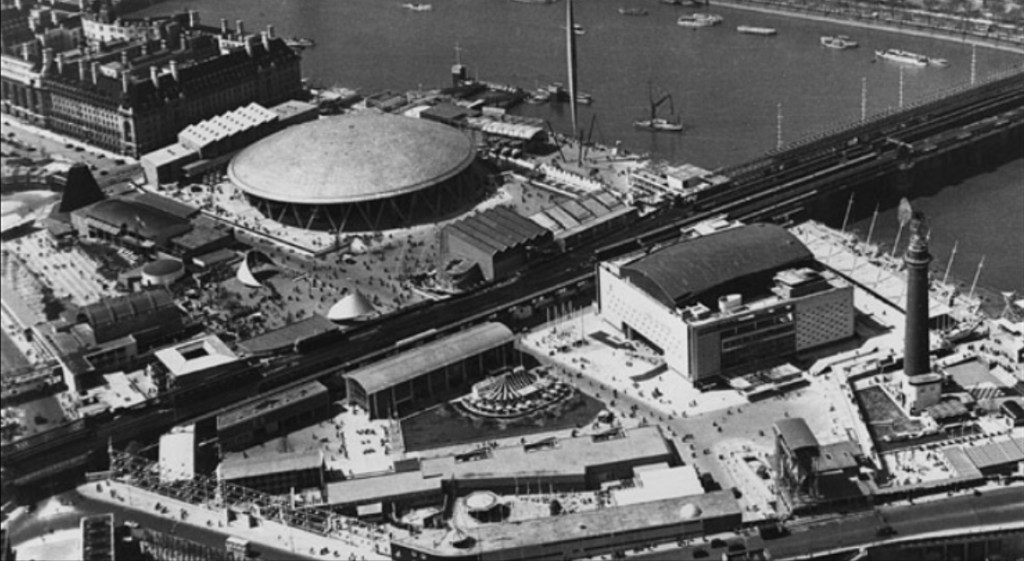
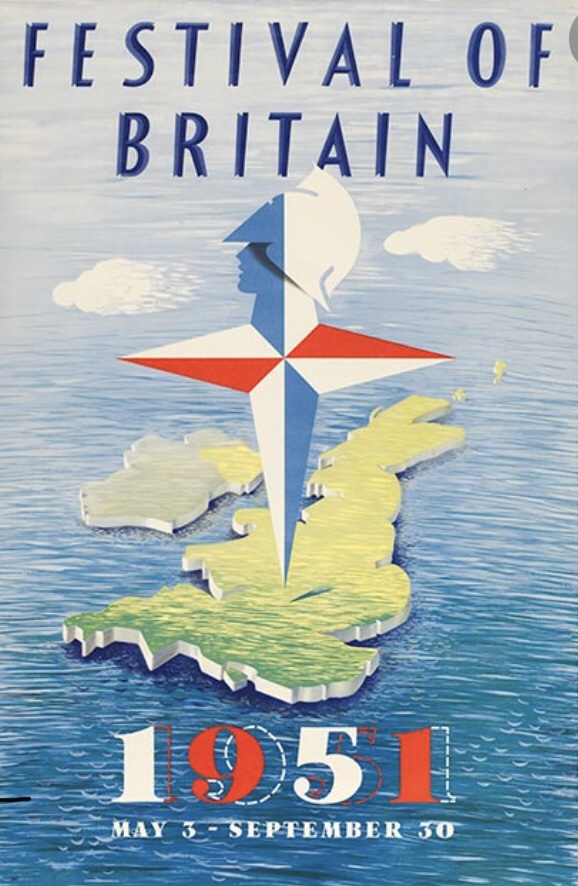
So the day of departure arrived, I had a brand new blue British passport, a new brown holdall bag, some pocket money and a Belgian address, and I was put on the Euston train in Darwen in early August, and waved my parents good-bye. I must say, I took it all in a very matter-of fact way. I have no memory of being in the least bit nervous or excited. In Euston, I was met by my dad’s London sales agent, Mr John ??? and I stayed with him and his family for the weekend, because it was the Festival of Britain in London, and at the time, it was a big thing, G.B. showing the world that we were well on the way to recovering from the war and beginning to flourish. That was also when the Royal Festival Hall opened and also, a huge adjacent funfair, the Battersea fun-fare, which was hugely popular and due to popular demand, stayed in operation for many years after the festival finished.
So when I arrived at Euston, Mr? was there to meet me and take me to his house in Sutton, Surrey. The household consisted of Mr and Mrs? and two teenage girls. The house was rather large and grand, in a big garden, in a quiet suburb. I thought it was just fantastic, really my dream of where I wanted to live when I was grown up. We spent the next day at the Festival of Britain. It was very international with pavilions representing most of the developed countries in the world; I can’t say much more, but I would say it was about half British and half international. The main attraction was a huge round domed building called the “Dome of Discovery”. I’m not sure but I suppose it was showing off all our Great British inventions. It was certainly very popular-science based. We were struck by the pavilions of the communist countries which were all exhibiting mostly the most boring looking heavy machinery. Another feature was a very tall structure, a column pointed at each end and bulging in the middle, called the Skylon. It didn’t do anything, just look futuristic. There are lots of photos of all this on Google images.
Anyway, we all had a very enjoyable day at the Festival of Britain. In the evening I was taken by one of the girls, four years older than me, very kind, for a drink in town in a Milk Bar – the latest thing, springing up everywhere. She said that she’d buy me the drink newly arrived from America … the first time I came across Coca Cola.
The following day, Mr? took me to Victoria Station and put me on the boat train to Dover, and I managed without any anxiety or mishap to find the Ostend ferry and some hours later arrive in Ostend where Nellie met me, and finally brought me by train to Peruwelz. The whole journey was straight forward and uneventful.
The Hergibot household was made up of Nellie, who was 45 at the time, her younger sister Georgette (36) and their mother, not forgetting Yacko (Anglicised spelling!), a black spaniel, noisy and not well behaved, but greatly pampered; a “chien gâté” That’s how I learned the verb gâter. Both Nellie and Georgette had never married, but they had one or more married brothers and sisters, one living and working in the Belgian Congo. They lived “over the shop”. The front of their home was a draper’s shop, with a workroom behind, where, during working hours there were maybe four women employed as dressmakers. The family lived in the rest of the fairly large building. It was all quite normal, sitting room, dining room, kitchen, bedrooms, etc; I can’t remember much, except there was no indoor loo. The loo was in the back yard/garden and was just a loo seat over a stinking hole, not a loo with a flush. There must have been a way in which the stinking hole was emptied periodically, but I never asked anyone and no-one told me anything. Anyway, I was not at all troubled by the loo, I just accepted it as normal without thinking too much about it.
So what to say about that stay? The Hergibot sisters couldn’t have been kinder and more welcoming, and I was very happy to be staying with them. There was never a tense or difficult moment. They were busy during the week of course and they introduced me to some boys of my age. There were two in particular that I made friends with, one called Daniel who lived just across the road/square where his parents ran a greengrocers shop, and the other called Michel who lived a bit further away. There must have been many days when we hung out together, sometimes with others as well, doing nothing much. We wandered round the village and the surrounding countryside, the huge market in the main square on market day…, but I have no memories of that (a bit about the market), but we were never bored, I’m sure, and there was never any friction or unpleasantness. Nobody spoke English – not long before it was time to go home I came across a guy who ran a bar in the Grande Place who was a Welshman from Newport, Mon. Otherwise, all communication was in French, and my spoken French was about zero to start with, but I managed to get going somehow, and I must have improved enormously over the weeks. I learnt a lot of French in the Hergibot household and sometimes I also taught them a bit of English. Once I was teaching them the days of the week in English, and when we got to Thursday, and I was getting them to have a go at saying “th,” it got funnier and funnier as they just couldn’t manage “th” and we laughed such a lot. The mother was a grim looking old lady, always dressed in black, probably much younger than me as I write this (not quite 80 yet). She was never a problem, but she hardly spoke to me at all.
All in all, daily life chez Hergibot was very agreeable, lots of fun, good meals, no TV…
Belgium seemed to have recovered from the was quicker than the UK. We still had food rationing and there were still shortages, but that had all finished in Belgium, and there was certainly no shortage of the things I might buy like sweets and chocolate. I and the other boys were all intensively interested in cars. Daniel’s dad had a British car, a Standard 12, which Daniel was very proud of. At that time, in the UK you really rarely saw a foreign car, just Austins and Morrises and so on. Here the cars were mainly German, French, British and American. We boys got most excited about the American cars (always huge), and I soon learned to recognise all the different makes and models, and what year they were from; the model changed almost every year.
When I arrived, I had never learnt to ride a bike and Georgette taught me – along with quite a bit of practising on my own. The bike was ancient, black and perfectly serviceable. It had brakes that you applied by pushing backwards on the pedals. Anyway, I got going reasonable quickly, and then was able to explore further away than just by walking. The only memorable moment was when I was riding along a narrow footpath and lost my balance and fell against a barbed wire fence; I had some very impressive scratches along my leg on the side that I fell on. Luckily it healed up quickly, without any infection or anything; it was cleaned up for me when I got back to the house.
We went on a number of outings on which we were driven by Monsieur Paul; the Hergibots had no car. Monsieur Paul was a regular visitor to the house. At the time I thought nothing of it, but now on reflection, it could be that Georgette and he had a relationship. I never saw or heard anything to suggest this though. Monsieur Paul was a typical – so I thought – prosperous looking Belgian business man, rather tubby, always in a suit and tie, often with a big cigar, driving a big newish American car, while I was around, the latest model Chevrolet coloured maroon. Always kind and friendly towards me.
Once they took me to Arras in Northern France to visit the WW1 war cemeteries. It really was an eye-opener to me; I had no idea. Of course I’d heard a lot of talk about WW1 and its horrors. Many of the kids I knew at the time had fathers who had fought in that war; but that was all nothing in comparison with seeing those rows upon rows of white grave stones, reading the inscriptions, the ages, some many unknown soldiers.
Another outing was to Waterloo to see the battlefield, the memorial, etc., and the museum. A great day out, and very proud to be British. But I certainly found the descriptions of the sequences of the battle too difficult to follow. Still the Duke’s army won and that was the main thing for Europe. (Did I mention what well into the twentieth century, naughty British children were threatened with, “Bony will come and get you”?)
Once we all went to the cinema, in Valenciennes, in France, the nearest sizeable town. We saw “La fille du puisatier”, “The Well digger’s daughter.” I was struck by the fact that the seats were just made of wood. I’d never been to a cinema where the seats were not upholstered before. The film was in black and white, and I did not understand much. But it was nice to go to the pictures anyway. We saw a remake of that film not long ago, and this time I understood a lot more – but still not everything.
I was taken to mass at the local parish church once; (Nellie told me that when she came to Darwen she went to a Sunday service in our Church of England church, so I should be equally open minded and go to her R.C. church.) It was all in Latin in those days, and it felt very different to Saint Cuthbert’s.
We went over the border into France occasionally at the weekend to Vieux Condé, the first village over the border, for an aperitif, as ever, driven by Monsieur Paul. (The prices on alcoholic drinks were lower than in Belgium). Once I was bought a Pernod, another first experience, accompanied by a lecture on how easy it is to drink and how easy it is to get drunk before you realised; a stern (not very) cautionary lecture.
I remember that we went swimming a few times, maybe twice in fact, once I was taken to the indoor swimming baths in Charleroi by Daniel’s dad, with Daniel and his older sister, and one (or twice) in the canal going through Peruwelz with Georgette and Nellie.
When it was time to go home, I bought things that were still in short supply in Britain as presents for my parents, a huge box of Cote d’Or chocolates and a large ham, not a whole one but perhaps a half. Somehow I managed to cram them into my holdall bag. I also bought my mother a tapestry set, with lots of different coloured threads to be stitched onto a webbing pattern. It was not appreciated much, and never made up
Then Nellie accompanied me to Ostend, and as far as I can remember, I made my way back to Darwen on my own. Perhaps someone met me and saw me from Victoria to Euston station; I don’t remember. It was nice to be home and to give out my presents.
We stayed in touch with Nellie and Georgette for a good few years, and once we called on them, in the mid-1950s, when we were en route from holiday to a channel port. But then we lost touch and heard no more from them.
That stay in Peruwelz made a big impression on me, and I mention in to Isabelle quite often now, the names of the different sorts of lettuce that I learnt in Daniel’s parents’ shop, the fact that I initially thought that Peugeot was called Geugeot, because the name on the cars at the time was in joined-up writing and I thought the initial P was a G; I still call our car a Geugeot occasionally, or rather, it should be spelt Gheugeot, with a hard G, the first time that I could remember being in a country without rationing, the low value coins with a hole in the middle… (The parish priest had announced that coins with a holes in the middle were not good enough for the collection plate. So much for the widow’s mite!)
There we are; my first trip abroad; I could go on!

 Greenwood family history