Started 19 June 2012
Tom Memoirs Part II
My parents up to 1938
So, ladies first; what can I tell you about my mother and her life in Austria? And again the answer is, surprisingly, at least for me, little.
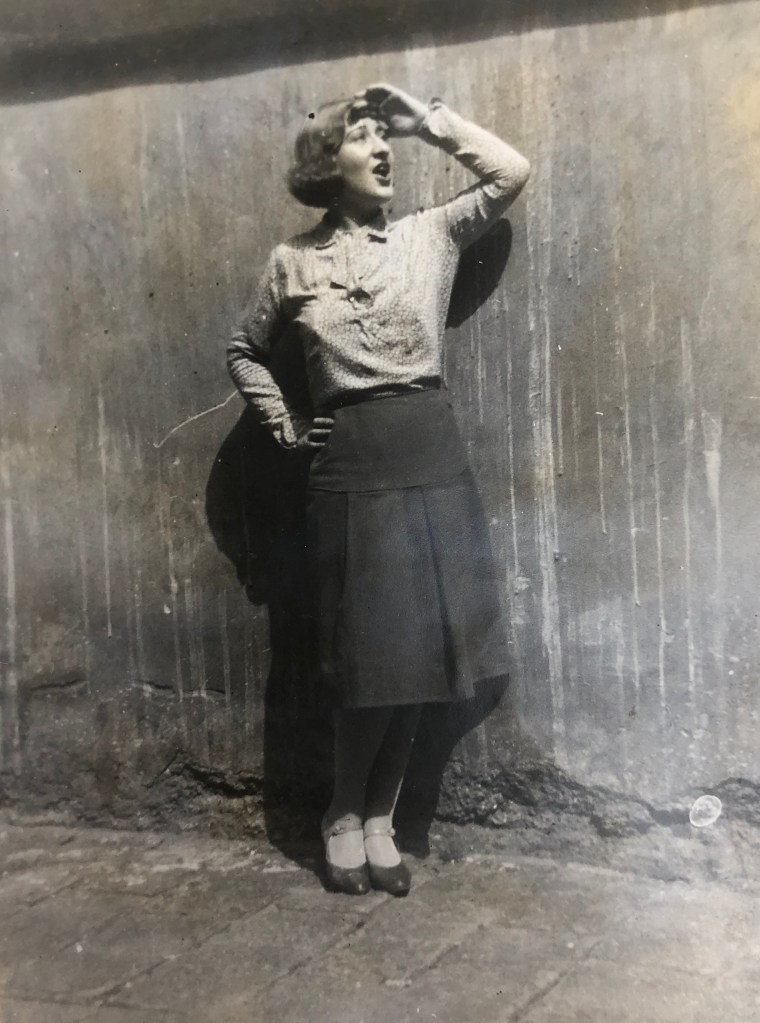
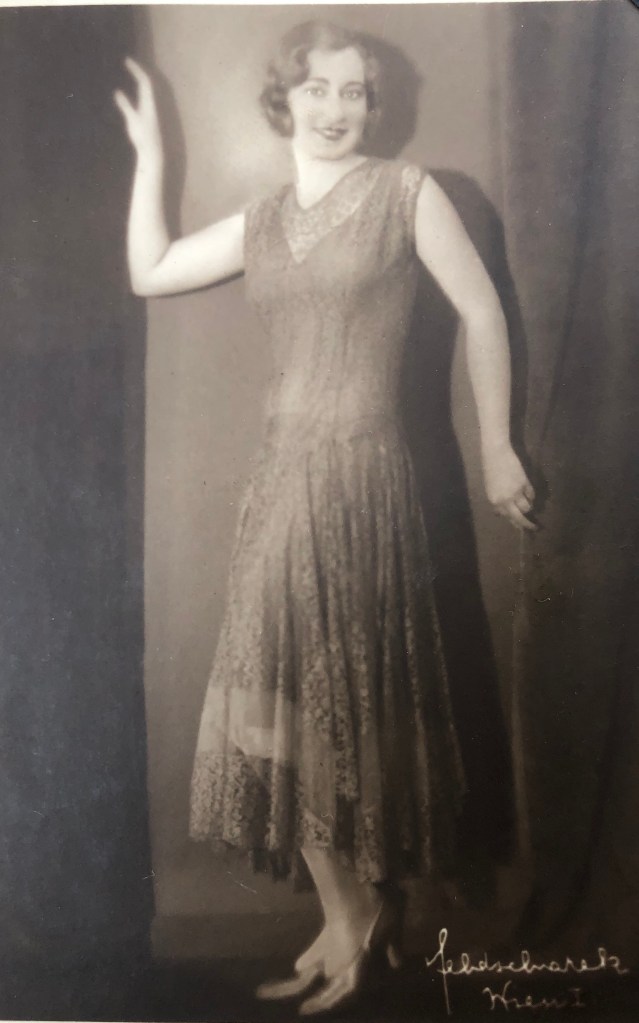
According to her passport, she was born in Moedling, a town not far from Vienna on 17 June 1910. So she was the younger of two girls, about 5½ years younger than Fritzi (Elfriede). I don’t know how she came to be born in Moedling, perhaps because there was a maternity hospital there. So far as I know, the family always lived in Vienna. There are a few photographs of her around, and she’s wearing glasses from a very early age. She told me this was because she had quite a bad squint and that this was corrected by an operation when she was about ten; however the operation damaged her sight in one eye, and afterwards she could only see well from the other eye.
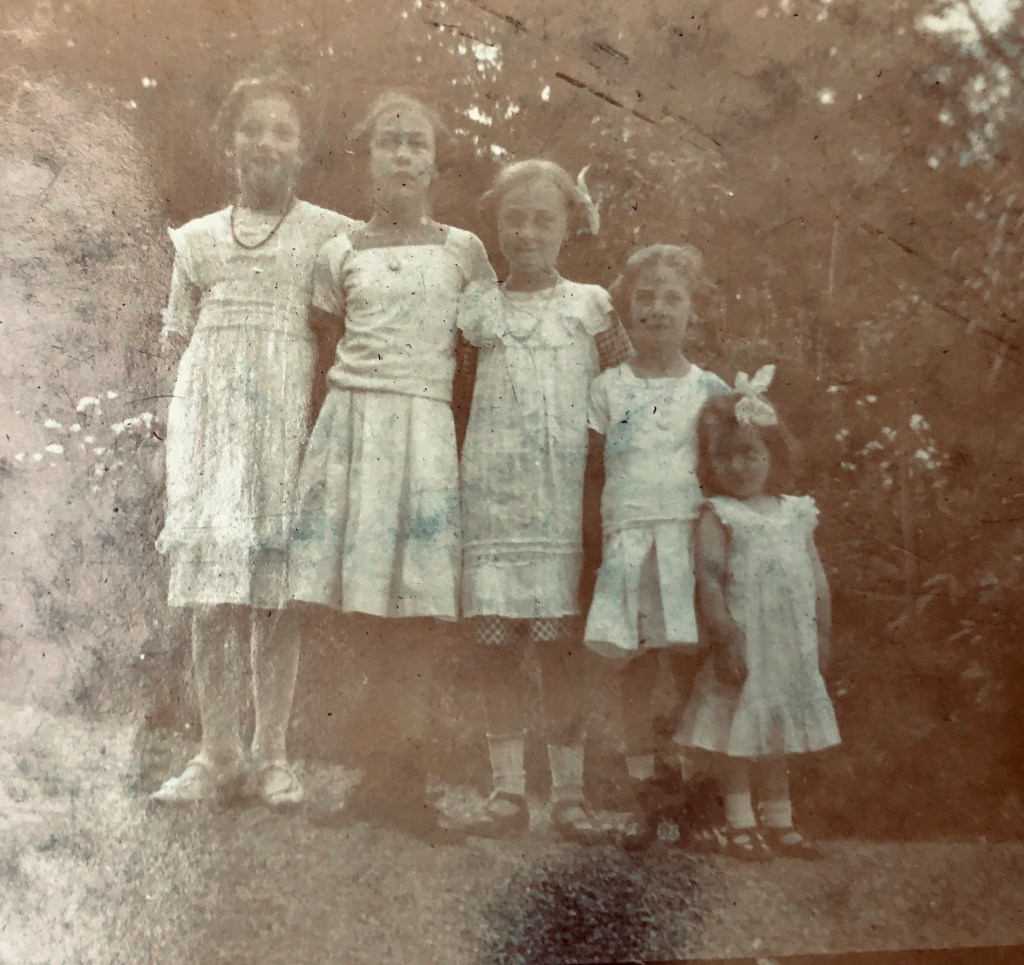
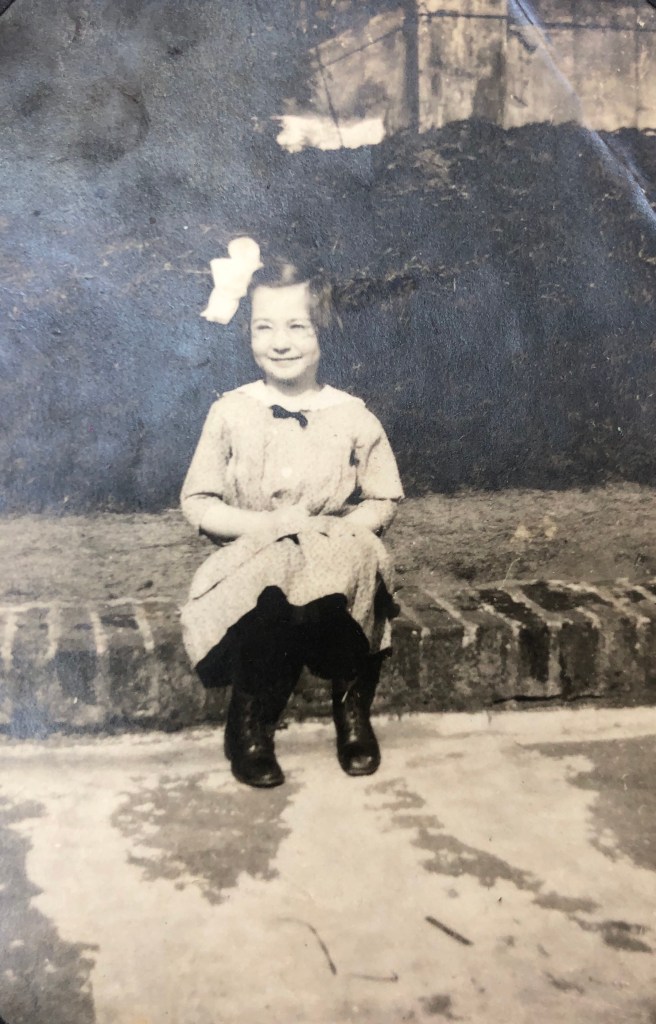
She was not very bright at school, much less so than Fritzi, and she was accepted at a selective secondary school on the basis of being Fritzi’s sister, after she had failed the normal entrance procedure (exam?). I suspect she didn’t do very well at school and that she left at 14 or 15. I can remember that she could add up a column of figures quickly and accurately, always in German, even after decades of living in England. She had piano lessons and could play quite well, even by ear, but not nearly as well as Rudolf; she knew some classical poems, or at least sizeable parts of them, e.g. Goethe’s The Erlking, the Wallfahrt nach Kevlaar, by Heinrich Heine, off by heart (do you know them Caroline?); her French was quite good and she welcomed any opportunity to speak it. When I was small, she taught me:
Le boeuf, der Ochs,
La vache, die Kuh,
Fermez la porte, mach die Tuere zu.
I suppose she learnt it when she was young.
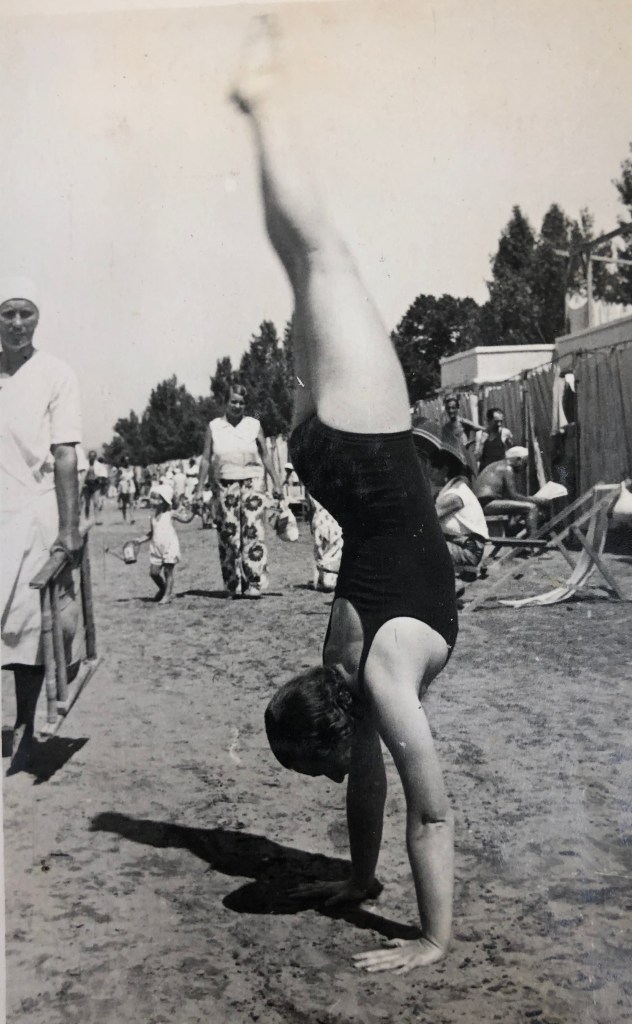
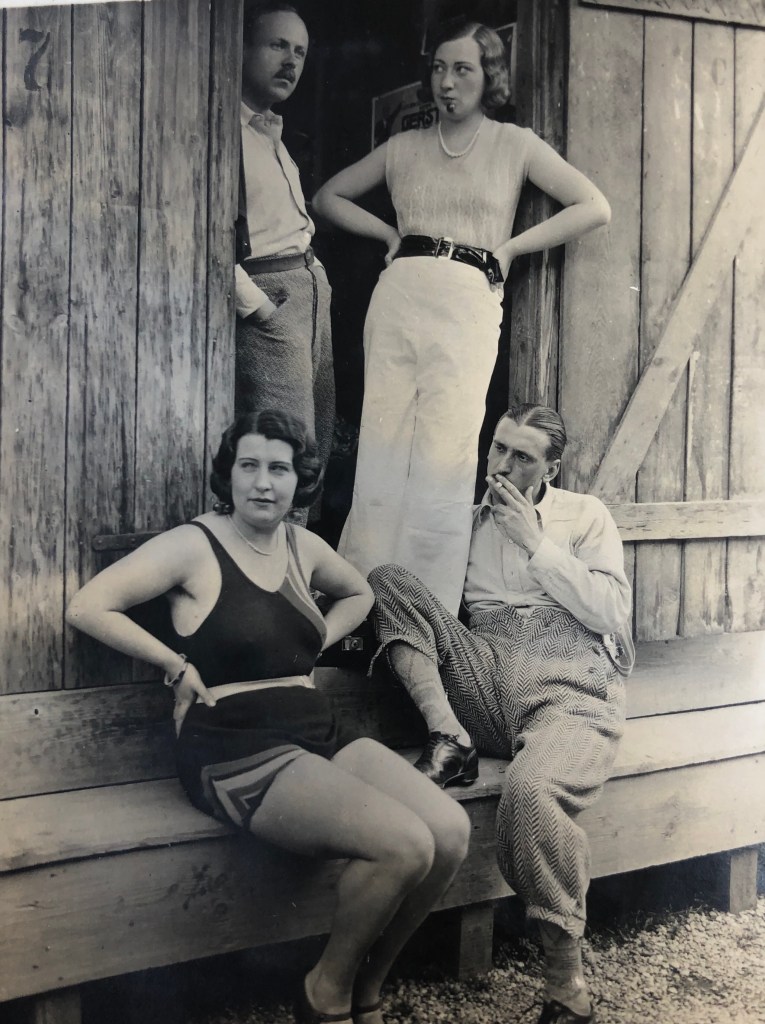
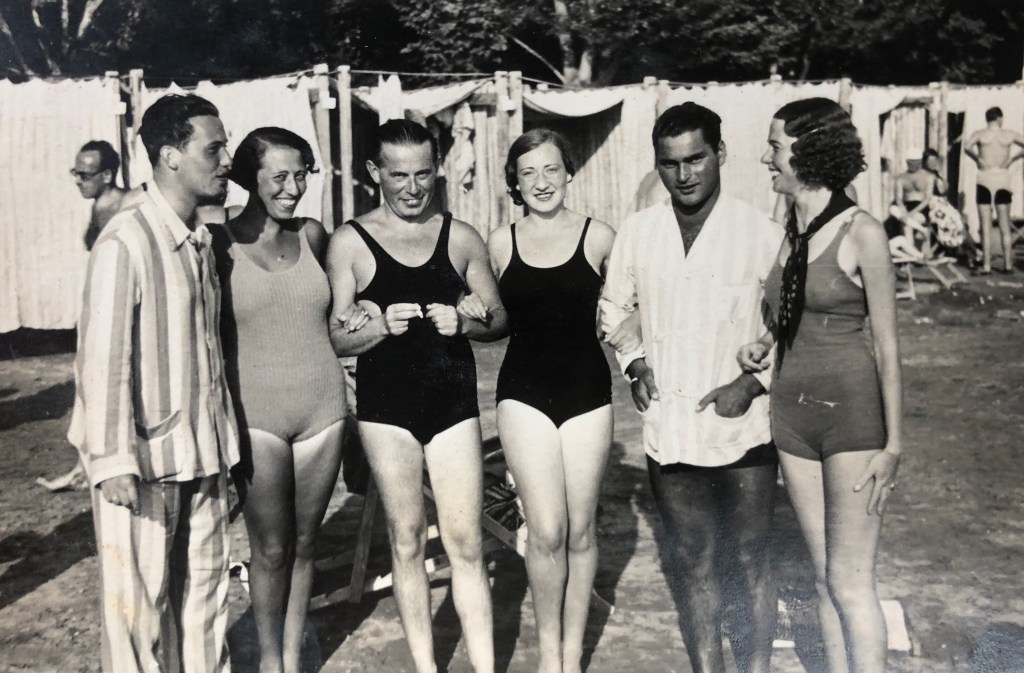
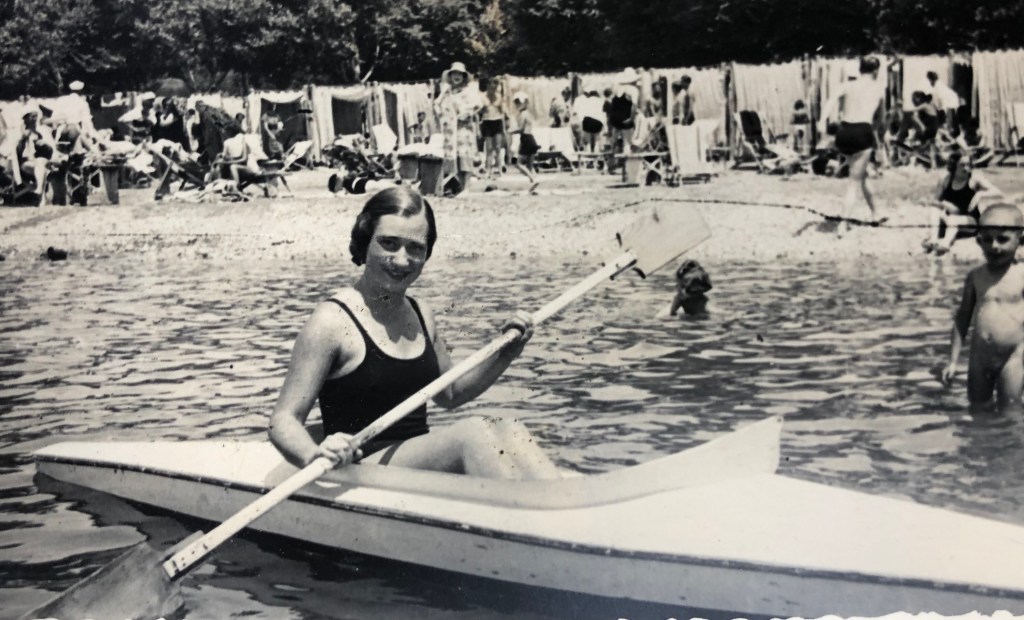
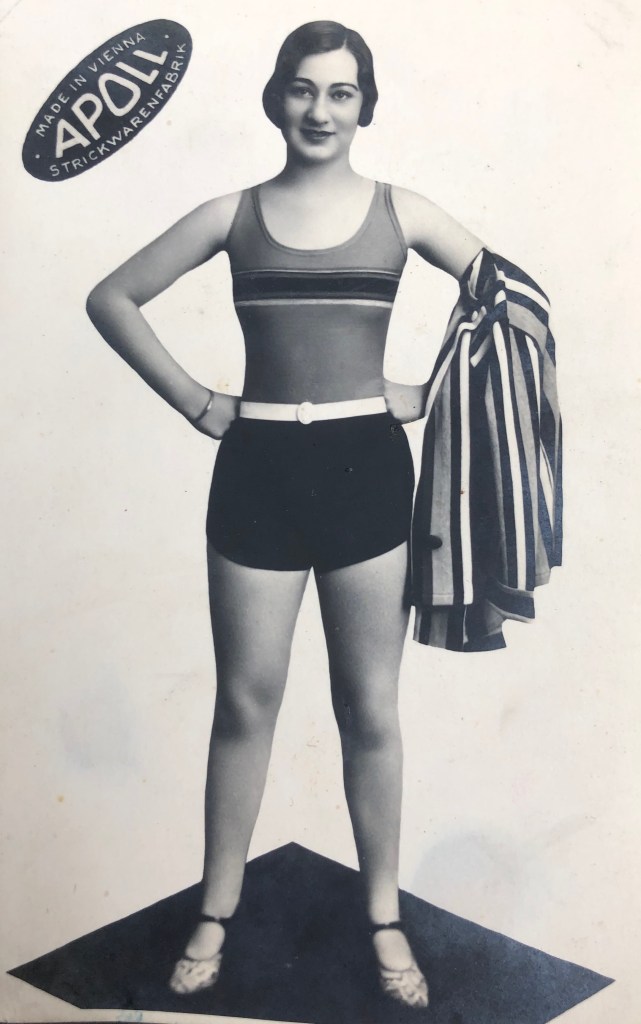
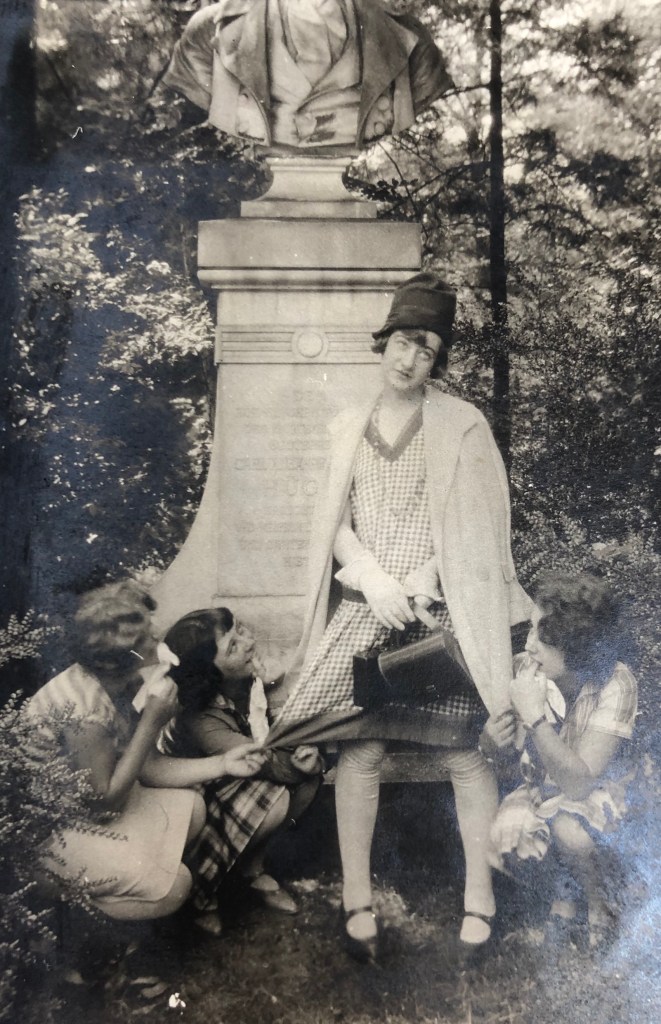
In her late teens she was keen on, and I think quite good at, gymnastics; there are photographs of her for example walking on her hands. In fact it was her walking on her hands at an outdoor swimming pool in Vienna that first caught my father’s attention; he asked a friend who he was with if he knew the girl that was walking on her hands and then asked to be introduced to her.
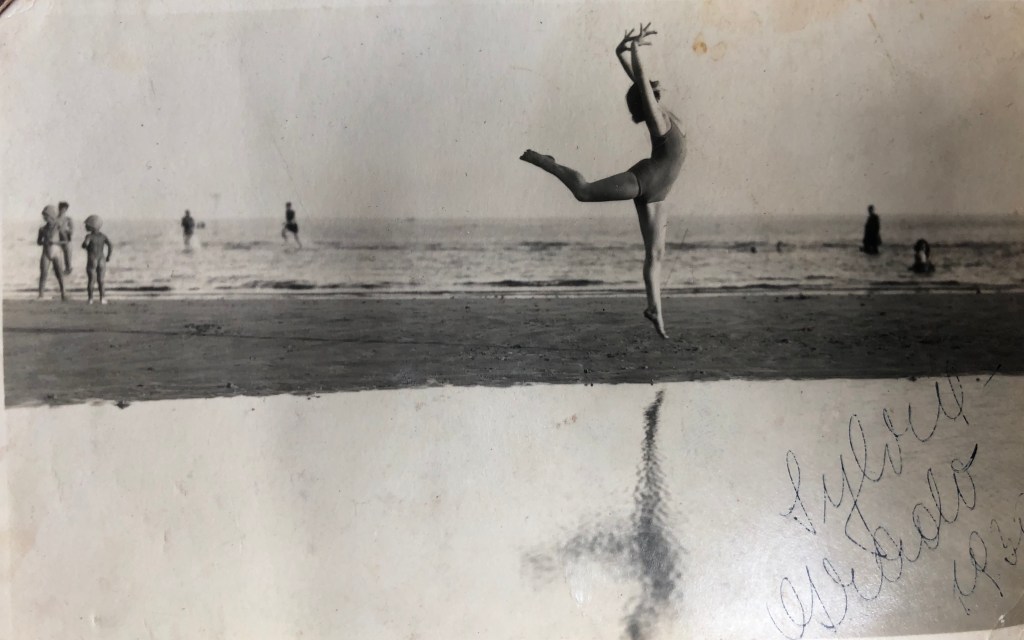
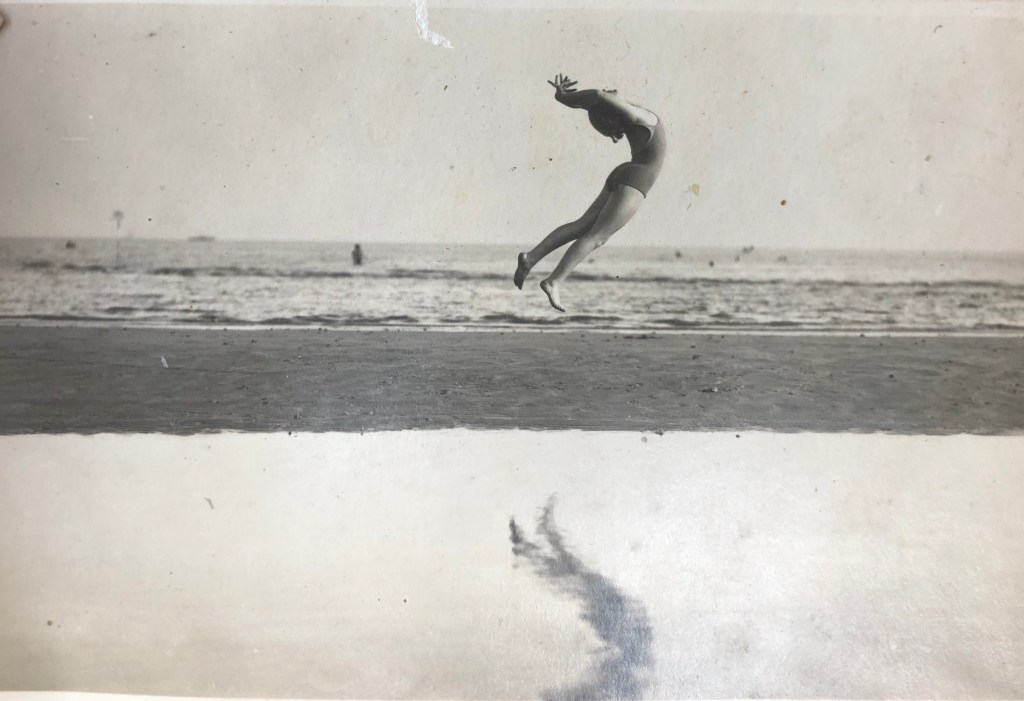
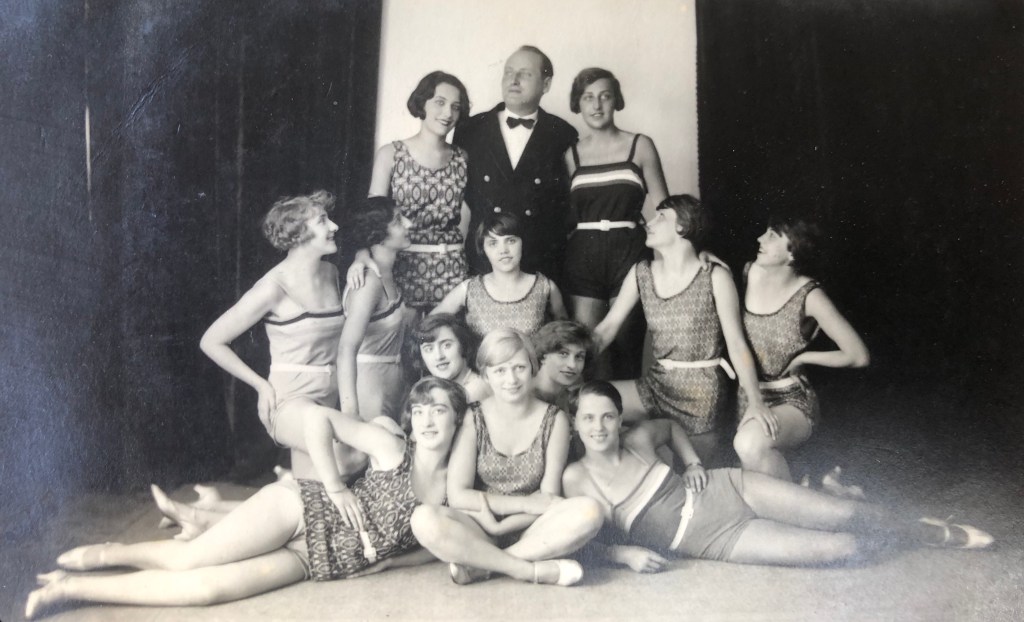
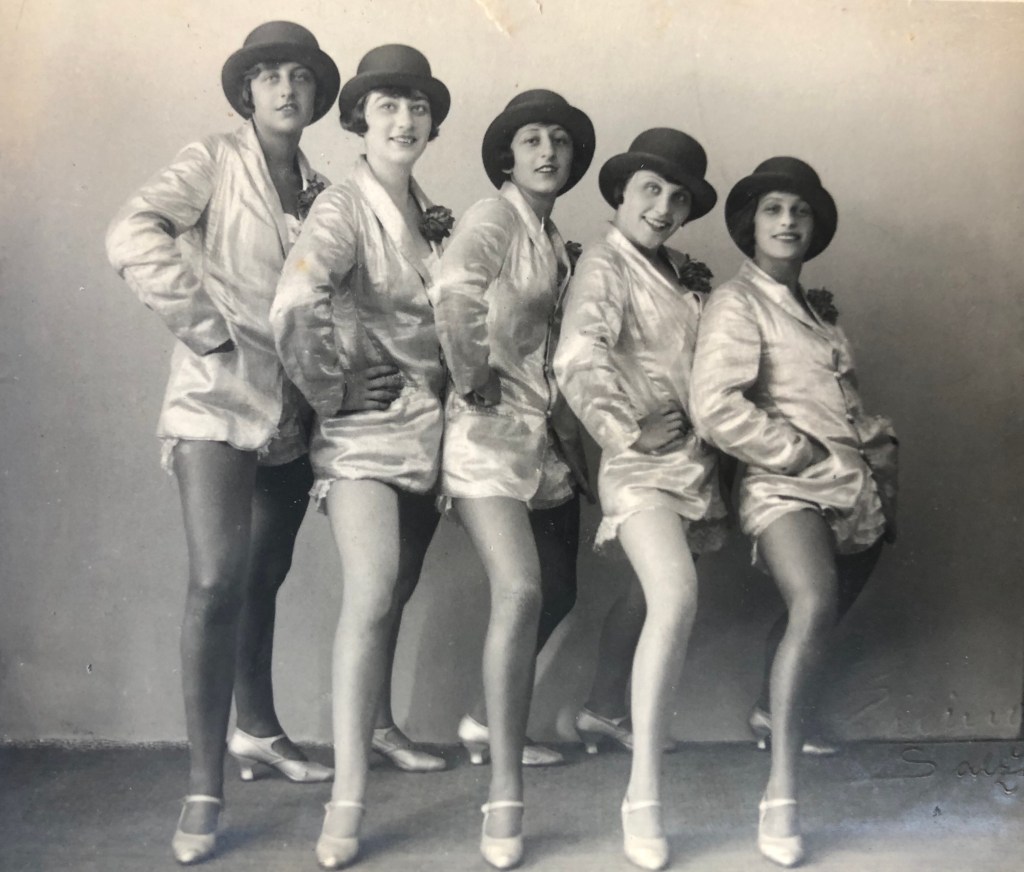
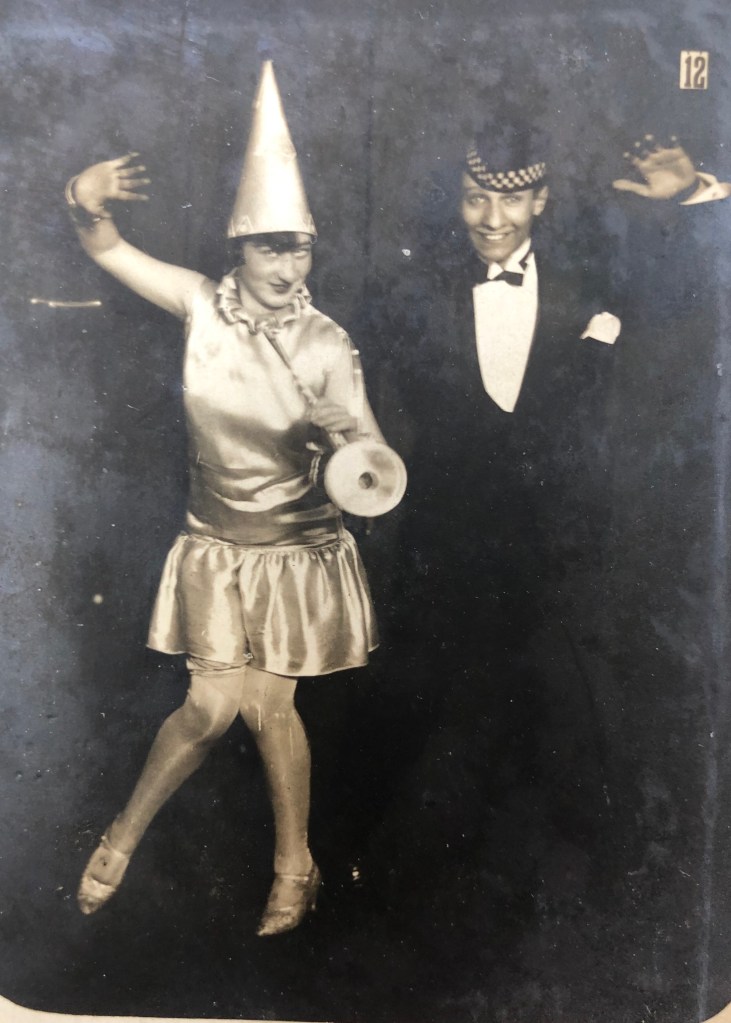
There’s more to be said though about the time before she met my father. At some point she decided that she wanted to be a chorus girl and seems to have had some success at this. At one time she danced in the company run by Josephine Baker, who was world famous at the time, the late 1920s. We have quite a few photographs of her in a chorus line, but her parents were not at all in favour and I think she allowed herself to be persuaded to stop; I think she regretted this later.
She had a big romance with an Italian called Ernesto – we’ve got a photo of him too – and he wanted to marry her. She was certainly very willing. However her parents thought that he was not to be trusted, and so my grandfather went to his home town in Italy to investigate, and he found out that Ernesto was already married. Quite a drama, and a terrible disappointment and humiliation for my mother.
There’s very little else that I can say about my mother’s youth. She once mentioned that there was a card game at home when she was little with cards showing various world-famous writers; one card had Shakespeare on it and she remembered pronouncing the name as if it had been German, pronouncing every vowel, Sha-kes-pe-ar-e. In fact, I think she always liked card games. When I was small, we played – at times – endless games of Schnapsen, and of Chicaneuse, a form of double patience. She also mentioned that once when she was a little kid she was in a tram on her own, and a woman, a stranger, said to her out of the blue, “You Jews, you all squint.” This must have been around 1918, and there was already plenty of nasty anti-Jewish feeling in Vienna.
The household that my mother grew up in was thus her parents, her sister and herself and the ever present Hilda, who did the housework and the cooking and seems to have been, not like a member of the family, but not far off. My mother only spoke well of her. My mother did not learn to cook or to sew while she lived at home.
My grandmother never had a paid job, and I don’t know what she did all day. She certainly had a circle of friends whom she saw in the daytime, and there were close relationships with her family and in-laws. At the time it seems that pretty well the whole family lived in Vienna, so her massive letter writing career did not start until she was in England.
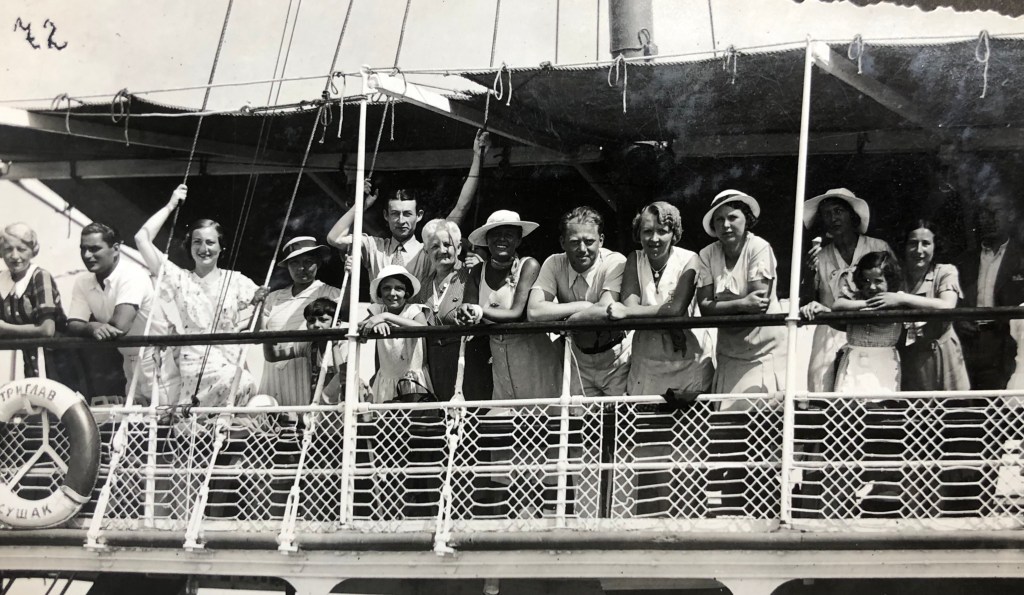
I think the family moved out of Vienna to a rented holiday house in the countryside each year during the school holidays – a good part of July and August – and my grandfather mostly worked during the week and came out to join the family for weekends. The family also had a summer holiday, I think, each year, perhaps just a week, by one of the Austrian lakes, or on the Adriatic coast of Italy, in for example Grado.
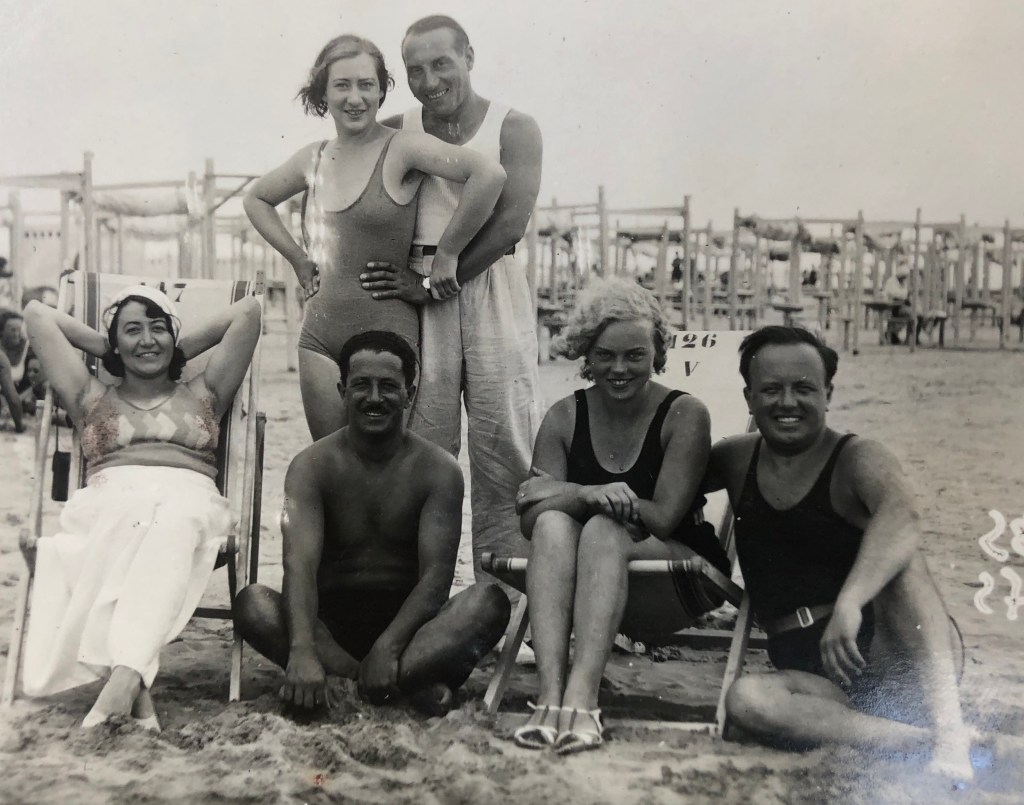
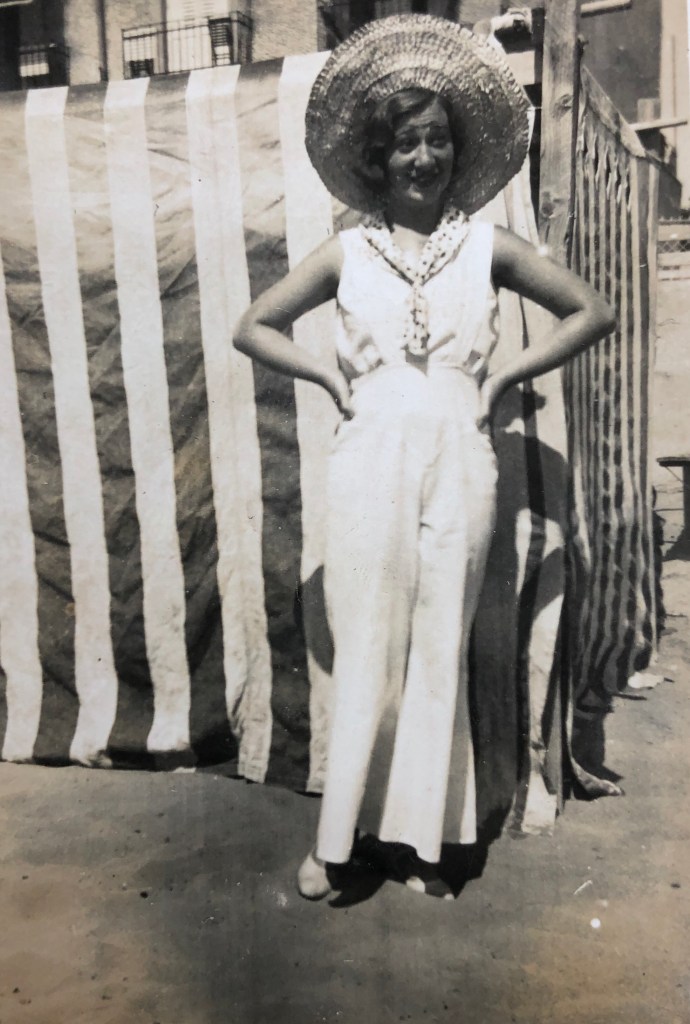
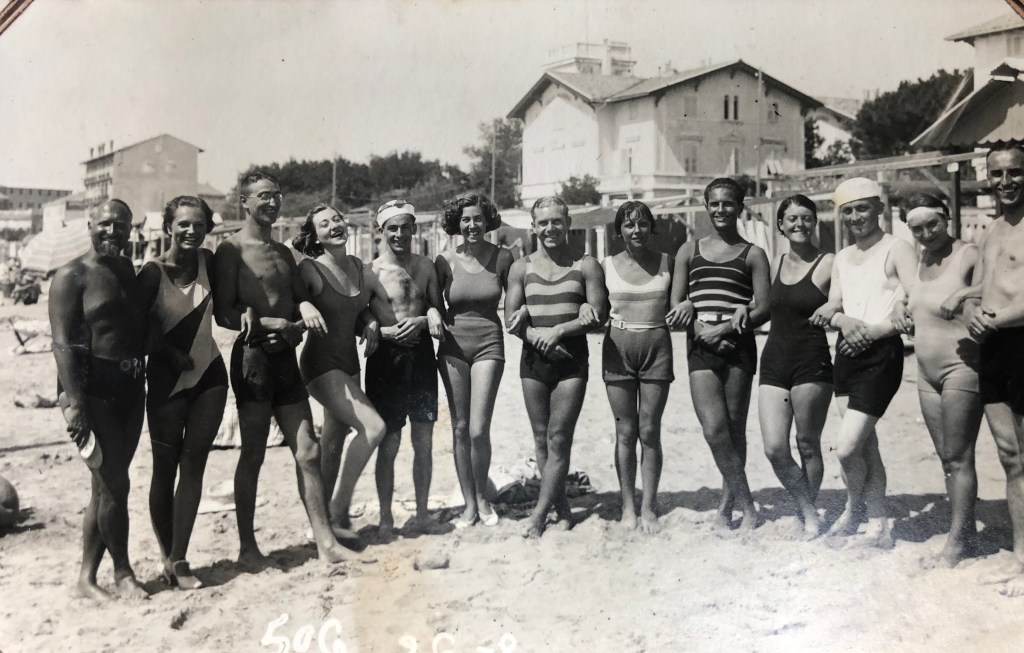
Fritzi married at 18, in 1923 when my mother was 13, so after that she was the only child at home.

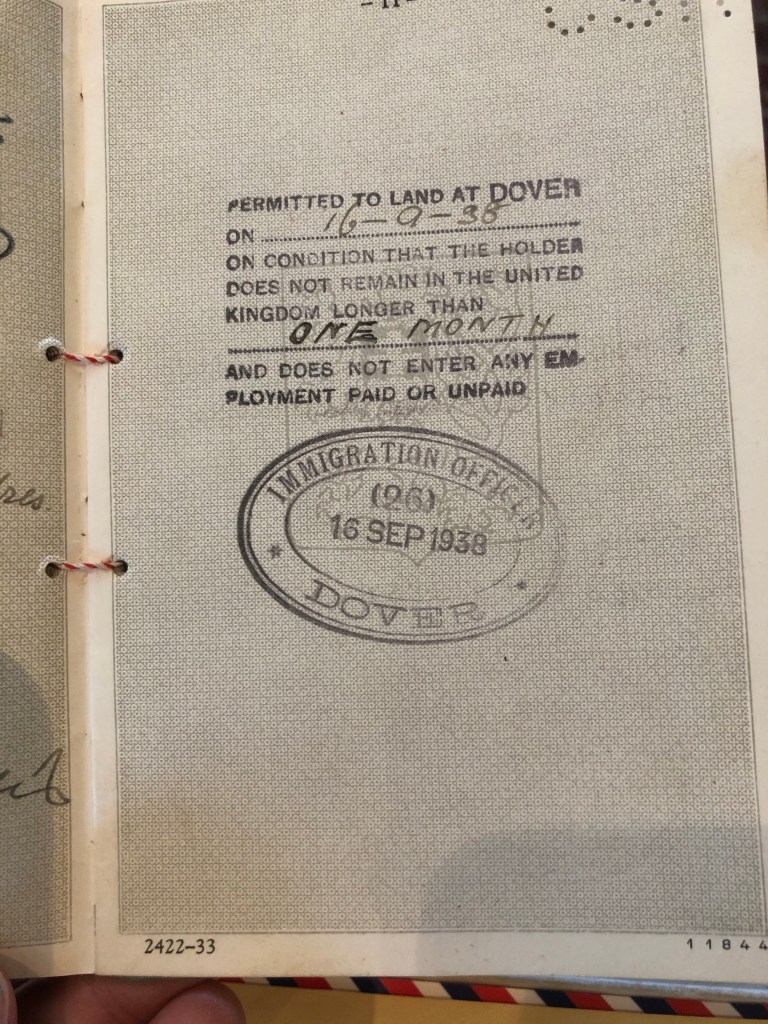
So – to my dad’s youth, up to the time that my parents got married on 22 December, 1932.
He was the fourth of five children,
Helene, born in the late 1890s and died aged about seven,
Walter, born 1900 died 1957 or 1958, (I was in my second year at Cambridge),
Edith, born about 1902 or 1903, died about 1991 or1992 (in Crans; I went to her funeral),
my dad, Otto, born 8 May 1909, died early July 1997,
Peter, born Jan 1920, died 1992 some months/a year? after Edith.
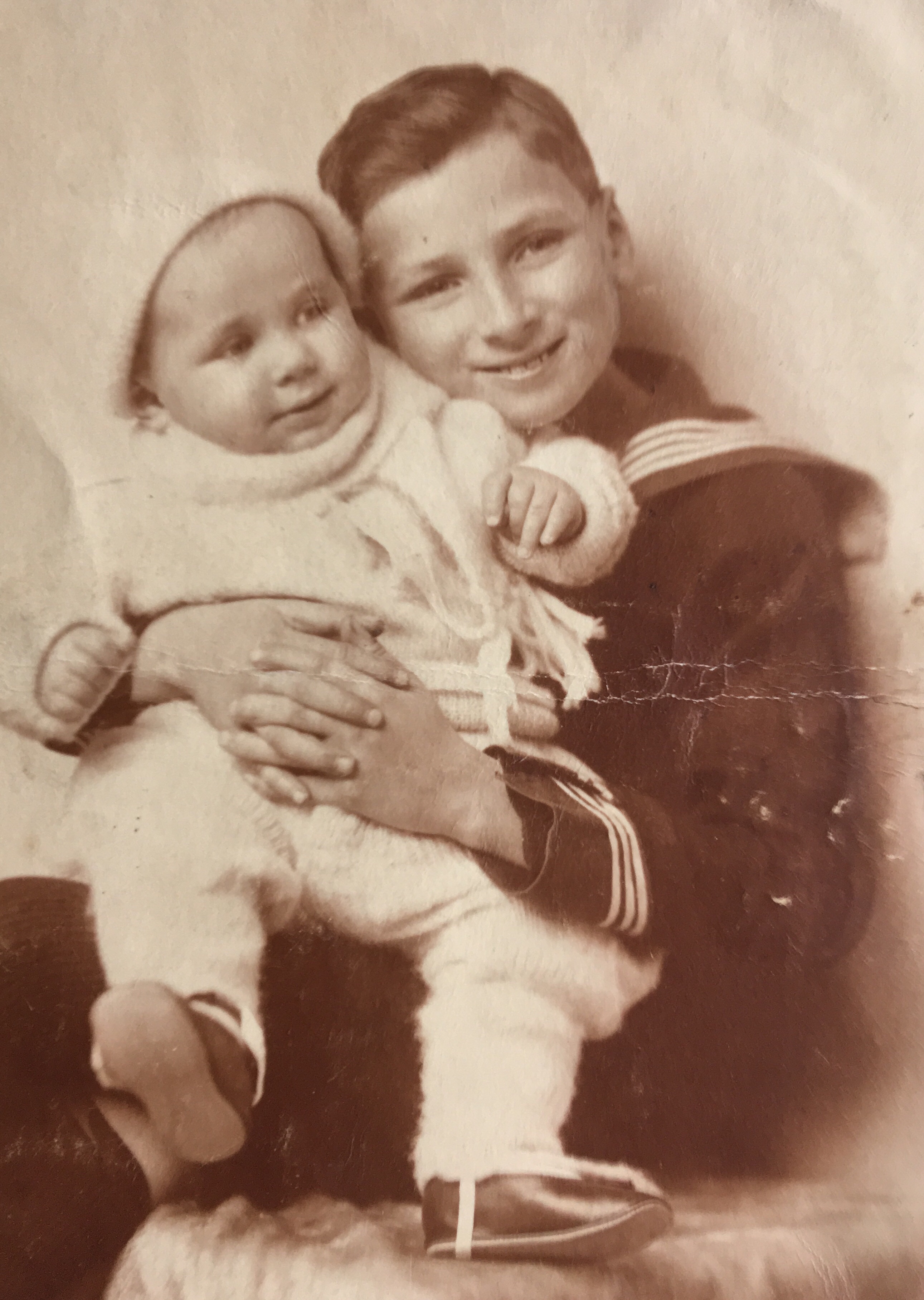
As I’ve mentioned, the family lived in a good sized detached house with a garden, in a prosperous suburb of Vienna. We have a baby bootee of my dad’s that has been metallised, and ever since I can remember has been green in colour, i.e. the colour of oxidised copper or a copper alloy.
My dad had acute appendicitis when he was small, and was rushed to hospital for an emergency operation to have his appendix removed. That must have been during the first world war. He always said the appendicitis was the result of swallowing some egg shell. He once told me that at the end of the first world war, so in 1918 or 1919, when there was a great food shortage in Vienna, all the children in his class were told to come to school with an empty jar the following day. And the next day they all had their jar filled with sweetened cocoa powder, a gift from the USA. And the funniest thing is that in 1946 or thereabouts when I was at primary school in Darwen exactly the same thing happened; our empty jam jars were filled with sweetened cocoa powder by the class teacher, from a big sack, using a metal scoop.
All three boys joined the scouts and seem to have had very positive memories of their scouting. There are photographs of I think my dad in scout uniform. Otherwise I know nothing about his youthful out-of-school activities. He was a good swimmer, could swim a stylish, effortless-looking crawl, and seems to have played water polo. Doubtless he played soccer too.
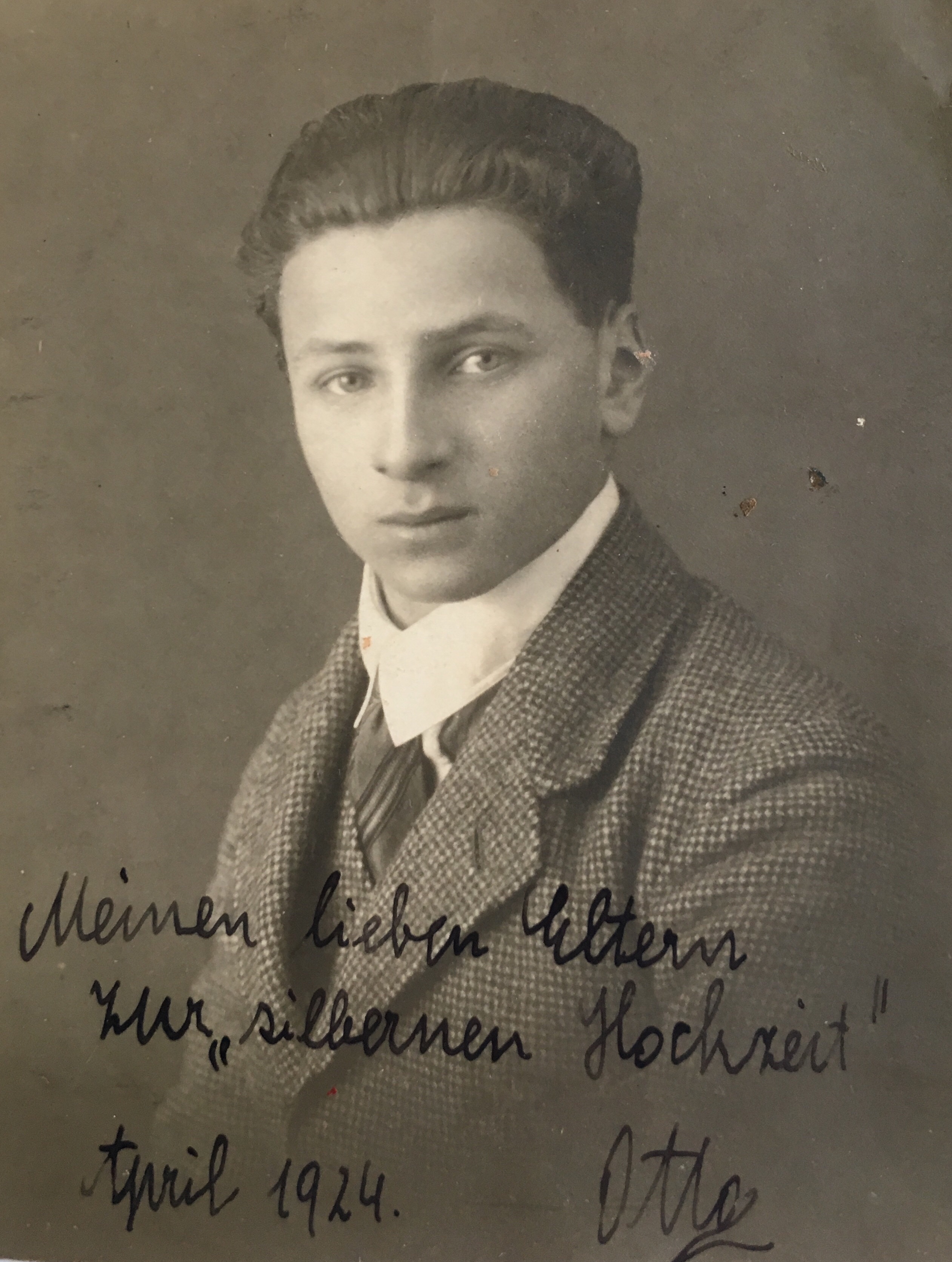
I know that he must have learned Latin and Greek at school, because when I wanted to do Greek at Lancaster, he said that he had done Latin and Greek at school and he regarded them as a complete waste of time. I think he learnt French but not English. Like my mother, he was quick and accurate with figures. So much for his school days in Vienna; I don’t know any more. When he was a teenager, sixteen or seventeen I guess, his father sent him to study at the Commercial High School in Neuchatel, Switzerland, (L’Ecole supérieure de commerce de Neuchâtel I assume. This has an internet site, and presumably it’s the same place.) He always said that it was here that his French really became competent. I don’t know how long he was there, perhaps a year; he said he lived in student lodgings in a village called Boudry. The only specific thing he even mentioned was a night-time boat trip on Lake Neuchatel with some of his mates to meet up with some girls. I would guess that after the time in Neuchatel ,he did no more studying.
His father died in late 1928 when he was 19. Between school and then, he must have been working in his father’s factory, including working some time in Berlin with Eric Hornemann’s father and doing his military service in the Czechoslovak army. There’s a photo of him with his platoon from that time. <Johnny adds – I lodged with Eric Hornemann in his house in Harpenden when I had my first job in radio in 1993. He would have been in his 80s and I was in my 20s but we got along very well. I got to know his children and grandchildren. Our families have known each other for four or five generations!>
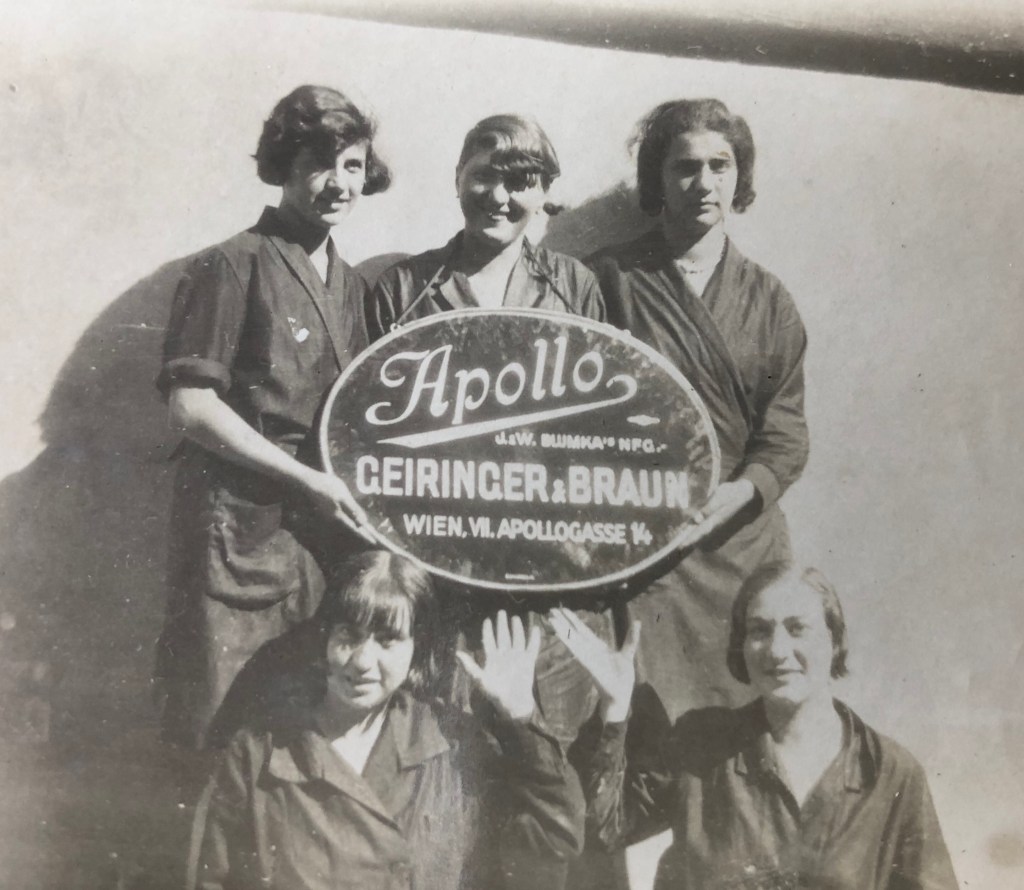
After my grandfather’s death, his widow Franzi and eldest son Walter, tried to keep the factory going, but it soon went bankrupt and was closed down. There was a small department in the factory that made plastic items (Zelluloidewaren), and the fellow in charge of this, Willi Kaufmann and my dad managed to retain ownership of this and to keep it going more or less successfully. This continued till my dad left for England in May 1938. We visited the factory, by that time run by Willi’s son Karl, in the 1950s, when it had switched to processing other sorts of plastics and was running up-to-date injection moulding machines. In the 1930s they made whatever would sell, toys, soapboxes, table tennis balls, sunglasses (I think), … My dad used to say that he could afford to get married in 1932 thanks to the yo-yo craze that year, when they made a fair bit of money from yo-yos. He also said that all the table tennis balls they made were identical, but the sports equipment companies who bought them and sold them under different trade names got various star players to say that the particular ones they used were distinctly superior.
Eva remembers visiting the grandparents’ (and also my parents’) flat and seeing my mother working there, painting faces onto hundreds of tumbler toys, those round-bottomed dolls that stand up when you try to push them over, Stehaufmaennchen in German.
Eva also remembers seeing the old great-grandmother, Helene’s mother Franziska Schubert, who would have been in her 80s when she visited. The old lady looked rather grim to Eva, seemingly always living in a tiny back bedroom, always dressing completely in black. Eva was five in 1934 when the old lady died so it must have been a very early memory.
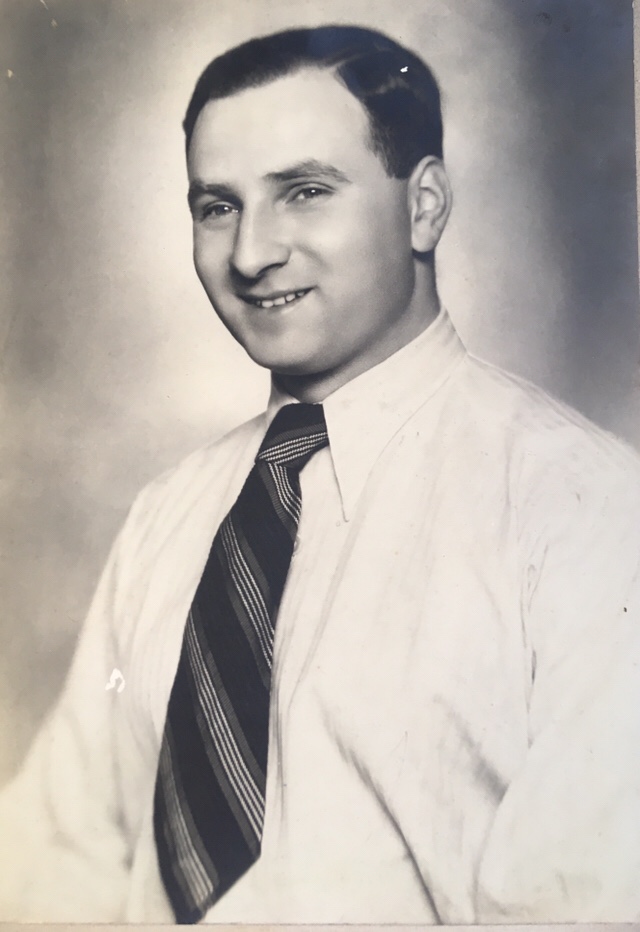
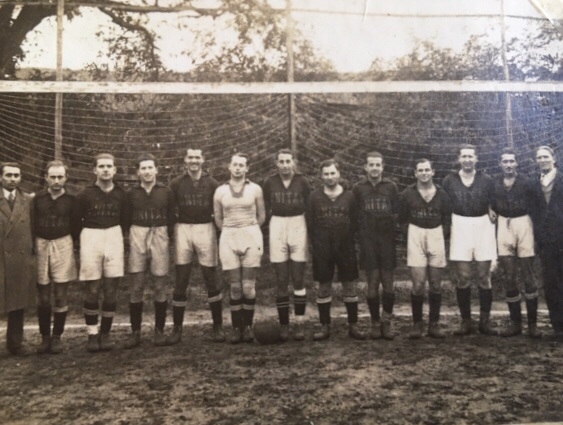
When he was not working, when he was in his twenties, so, in the 1930s, my dad certainly played soccer, there’s a team photograph with him in it, and he said he got into a car racing team, and drove Bugattis in races. He was no doubt a pretty good driver when be was young.
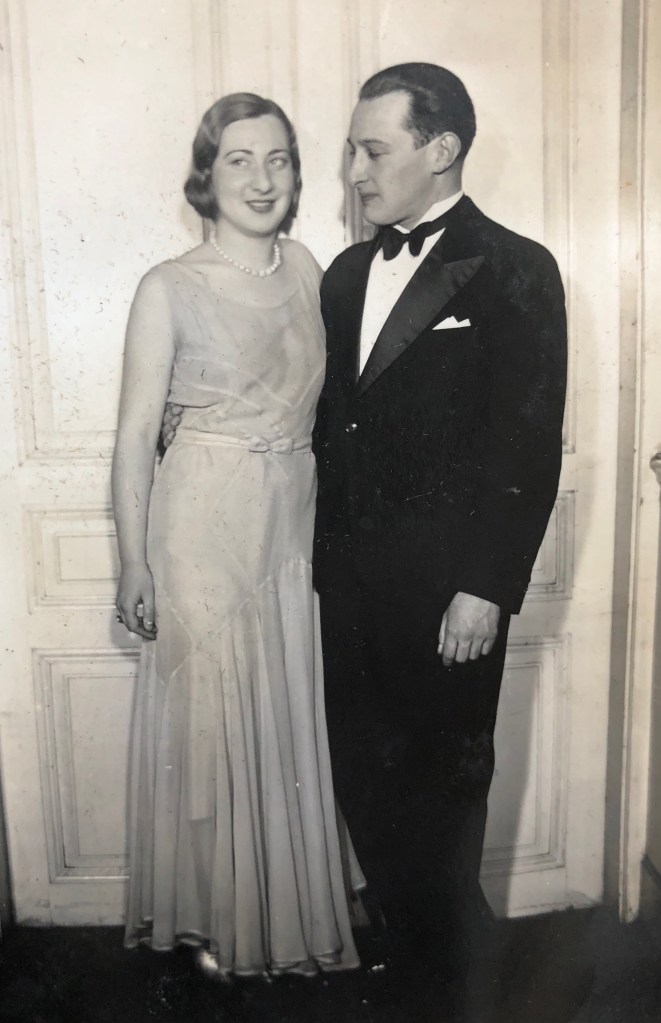
So that’s about all I have to say about my parents till they got married, on 22 December 1932.

 Greenwood family history